
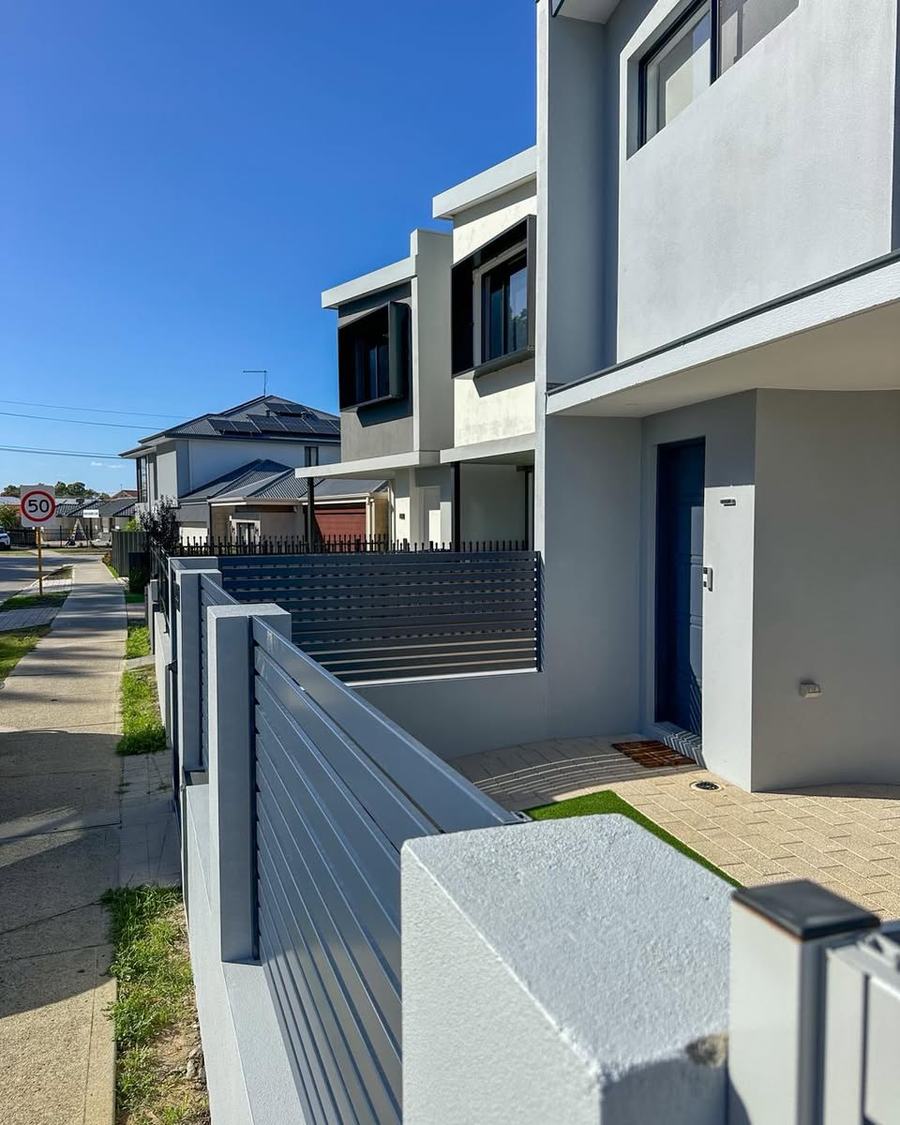
If you are weighing up slat fencing vs Colorbond for a Perth property, the right choice usually comes down to one thing - what you need the fence to do every day. Some owners want maximum privacy and a clean, modern boundary. Others want airflow, a lighter visual finish, or a feature fence that lifts the whole frontage.
Both options are popular across Perth, Bunbury and Busselton for good reason. They are durable, low-maintenance and well suited to modern homes. But they perform differently once you factor in privacy, street appeal, coastal exposure, budget and the layout of the site.
Slat fencing vs Colorbond - what is the real difference?
At a glance, the difference is simple. Colorbond fencing is a solid panel system designed for privacy, security and a neat, uniform finish. Slat fencing uses horizontal or vertical slats, most commonly aluminium, to create a more open architectural look.
That difference changes how each fence feels on the property. Colorbond tends to act as a practical boundary solution first. It creates a strong visual screen and helps define the perimeter clearly. Slat fencing is often chosen when appearance is just as important as separation, especially on front boundaries, courtyards, pool areas and gates.
Neither is automatically better. The better option is the one that matches the purpose of the fence, the style of the building and the conditions on site.
Privacy and security
If privacy is the top priority, Colorbond usually has the edge. Its solid infill panels block sightlines far more effectively than standard slat spacing, which makes it a strong option for side and rear boundaries, investment properties and commercial sites where screening matters.
That solid design also gives a sense of security. It clearly encloses the property, reduces gaps and creates a dependable barrier between neighbours. For many homeowners, that peace of mind is the main reason they choose it.
Slat fencing can still offer privacy, but it depends on the spacing, angle and overall design. Tight slat spacing gives more screening, while wider spacing allows more visibility and airflow. That flexibility is useful, but it also means slat fencing needs to be designed carefully. If a client wants privacy without the closed-in feel of a solid fence, aluminium slats can be a very good middle ground.
For front boundaries, many owners prefer slats because they provide definition without completely shutting off the home from the street. That can look more welcoming while still improving security.
Street appeal and design flexibility
This is where slat fencing often stands out. It has a more architectural finish and works particularly well with contemporary homes, renovated facades, coastal builds and properties where the fence is part of the design statement rather than just a boundary.
Slats can be used in full-height screens, feature sections, pedestrian gates and sliding gate designs. They also pair well with rendered pillars, masonry, timber-look finishes and modern landscaping. If the goal is to improve kerb appeal and create a premium look, slat fencing gives more design flexibility.
Colorbond has a cleaner and more uniform look. It suits a wide range of residential and commercial properties, but it is generally more understated. That is not a drawback for every job. In fact, for many side and rear boundaries, simple and reliable is exactly what people want.
Modern Colorbond colours can still look sharp, especially when matched well to roofing, gutters and exterior trims. On newer homes, it often delivers a tidy, cohesive result without pushing the budget too far.
Cost and value over time
For many projects, budget is the deciding factor. Colorbond is typically the more cost-effective option for standard boundary fencing, especially over longer runs. If you need to fence a large perimeter quickly and want a durable, low-maintenance result, it often offers strong value.
Slat fencing usually comes in at a higher price point. That is partly due to the materials, partly due to the design detail, and partly because slat systems are often customised to suit the site and the look of the property. Gates and feature panels in slats can also add to the overall spend.
That said, value is not only about the upfront figure. A well-designed slat fence can add a more premium finish to the front of a home or commercial premises, which may improve presentation and perceived property value. For some owners, that visual uplift is worth the extra investment.
If the aim is practical coverage on a sensible budget, Colorbond is often the straightforward answer. If the fence is a visible design element, slats can justify the cost.
Maintenance in WA conditions
Perth property owners usually want a fence they can install and largely forget about. Both Colorbond and aluminium slat fencing are good in that respect.
Colorbond is known for being low-maintenance. It does not need repainting like traditional timber fencing, and routine cleaning is generally enough to keep it looking neat. That makes it a dependable option for busy households, rental properties and commercial sites.
Aluminium slat fencing is also low-maintenance and highly resistant to rust, which is a major benefit in coastal and near-coastal areas. This matters across parts of WA where salt air can be tough on some materials over time. Powder-coated aluminium slats hold up well and are a practical choice where durability and appearance both matter.
The main difference is that slat fencing, with its visible faces and detail, can show dust and grime a little more readily depending on colour and placement. It is not high maintenance, but if the fence is a front feature, owners tend to notice surface build-up sooner.
Wind, airflow and how the fence feels
One of the more overlooked parts of this decision is how the fence changes the feel of the outdoor space. Solid Colorbond fencing creates a stronger visual and physical barrier. That can be excellent for privacy and noise reduction, but on some sites it can also make an area feel more enclosed.
Slat fencing allows filtered light and airflow. In courtyards, pool zones and front gardens, that often creates a lighter and more open feel. For homes that want screening without losing all connection to the street or breeze, that can be a major advantage.
This is one of those areas where it really depends on the property. A narrow side boundary may benefit from full privacy. A front fence around a modern home may benefit from openness and better visual balance.
Which suits different parts of the property?
In many cases, it is not really slat fencing vs Colorbond across the whole block. The better approach is using each material where it works best.
Colorbond is often the practical choice for side and rear boundaries because it provides privacy, security and cost-effective coverage. Slat fencing is often better suited to front elevations, entry gates, bin screening, pool surrounds and feature sections where appearance matters more.
This mixed approach gives owners the best of both. It keeps the larger boundary works efficient while still delivering a more refined look where the fence is most visible.
For commercial properties, the decision is similar. A warehouse, office frontage or multi-unit development may use Colorbond for secure perimeter fencing and slats for entry statements or screened areas near customer-facing zones.
How to choose the right option
Start with the purpose. If your main goals are privacy, security, speed of installation and reliable long-term performance, Colorbond is hard to beat. It is a strong all-rounder and makes sense for many Perth homes and commercial sites.
If your priorities include design, a premium modern finish and better airflow, slat fencing is often the better fit. It brings more flexibility in how the boundary looks and feels, particularly at the front of the property.
It is also worth thinking about what people will see most. A side fence between neighbours does not always need to be a design feature. A front boundary near the driveway and entry usually does.
That is where a tailored quote makes a real difference. Site levels, fence height, gate requirements, exposure to weather and desired finish all affect the outcome. A good installer will help you balance performance, appearance and budget instead of pushing a one-size-fits-all option.
At Perth Fence Pro, this is often where clients land - Colorbond where they need practical privacy, and slats where they want the property to look sharper from the street.
The best fence is not the one that wins on every point. It is the one that suits your block, your budget and the way you want the property to feel when the job is finished.