
Choosing a fence in WA usually comes down to more than looks. You are dealing with sun, coastal air, changing block sizes, neighbour boundaries and the very real question of how much upkeep you want in five years, not just next month. When weighing up Colorbond vs PVC fencing, the right answer depends on what you need the fence to do every day - provide privacy, lift street appeal, handle harsh weather or simply stay looking tidy with minimal effort.
Both materials are popular for good reason. They offer a cleaner, more modern finish than older timber options, and both appeal to owners who want a durable, low-maintenance boundary. But they do not perform in exactly the same way, and the differences matter once the fence is installed and exposed to WA conditions.
Colorbond vs PVC fencing for privacy and security
If privacy is the main priority, Colorbond is often the stronger all-rounder. Standard panel designs create a solid visual barrier with no gaps, which makes it a practical choice for side boundaries, rear fences and properties close to neighbours. It also gives a more secure feel, particularly for homes where a strong perimeter matters.
PVC fencing can also provide privacy, but it depends heavily on the style selected. Full privacy PVC panels are available, yet many homeowners are drawn to picket or Hamptons-style designs that are more about appearance than screening. Those styles can look sharp at the front of a property, but they do not deliver the same enclosed result as a solid Colorbond boundary fence.
For commercial sites or investment properties, Colorbond tends to win on simplicity. It creates a neat, secure line and suits projects where function, consistency and low ongoing management are key.
Appearance and street appeal
This is where the decision becomes more personal. Colorbond has a modern, clean look that works well on contemporary homes, duplex developments and commercial premises. It suits minimalist exteriors and blends easily with gates, screens and side access solutions. If you want a fence that looks tidy, understated and practical, it is hard to go past.
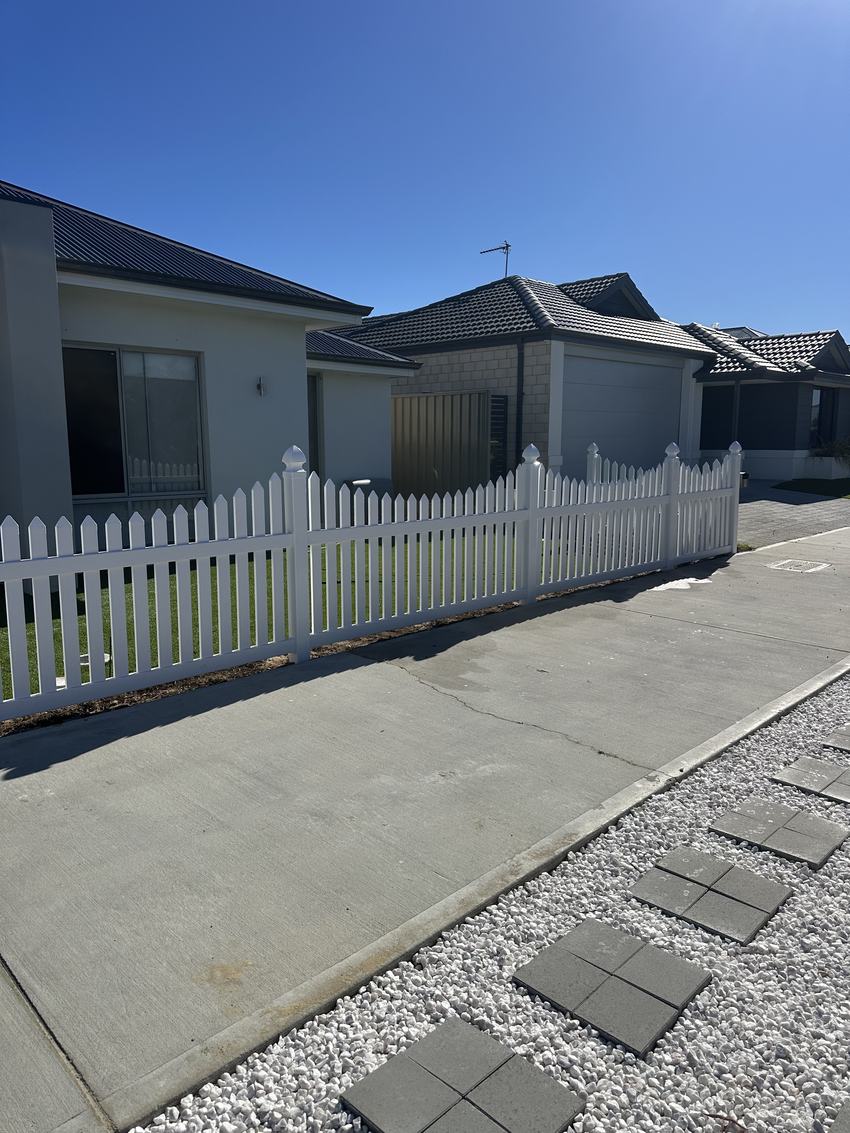
PVC brings a different style. It is often chosen for decorative frontage, Hamptons-inspired homes, garden boundaries and pool surrounds where a lighter, more architectural finish is the goal. White PVC fencing in particular has a distinct look that can brighten the front of a property and create more character than a standard metal boundary.
That said, style has to match the home. On some builds, PVC looks polished and premium. On others, especially more modern or industrial-style properties, Colorbond feels like the better fit. A fence should look like it belongs with the house, not like it was borrowed from another design brief.
How they handle Perth and coastal WA conditions
WA conditions can be tough on outdoor materials, especially in coastal suburbs and exposed regional areas. Heat, UV, wind and salt all play a part in how a fence ages.
Colorbond is designed for Australian conditions and has a strong reputation for durability when correctly installed. It performs well in heat, does not become a termite target and holds its colour better than many painted alternatives. For many Perth properties, that reliability is a major selling point.
PVC also handles moisture well and will not rot, rust or attract termites. That makes it appealing in damp areas or for owners trying to avoid the maintenance cycle that comes with timber. However, product quality matters. A lower-grade PVC fence can become brittle, fade unevenly or lose its finish sooner under harsh sun. A properly specified, quality PVC product is a different story, but this is not a material where cutting corners pays off.
In windy areas, installation quality matters just as much as material choice. A fence is only as reliable as its posts, footings and layout. On larger blocks or exposed sites, you want a fencing contractor who understands local conditions and plans for them from the start.
Maintenance and long-term effort
Both Colorbond and PVC are considered low-maintenance, but they age differently.
Colorbond generally needs little more than occasional cleaning to remove dirt, salt and build-up, especially near the coast. It does not need painting, and there is no need to deal with warping, splintering or regular sealing. For busy homeowners and property managers, that is a big plus.
PVC is also easy to look after. It does not need repainting and usually cleans up with a wash to remove surface grime. For front fences and decorative sections, that low effort is attractive. White PVC does show dirt more easily than darker fence colours, though, so if your property is near busy roads, gardens or red dust areas, you may find yourself cleaning it more often to keep it looking fresh.
Neither option is high-maintenance, but the kind of maintenance is slightly different. Colorbond is more forgiving in everyday use. PVC stays neat with minimal work, but because it often comes in lighter finishes and more decorative profiles, marks and grime can stand out sooner.
Cost: upfront price versus overall value
Price matters, but it should be judged against lifespan, appearance and the role the fence plays on the property.
Colorbond is often a cost-effective choice for larger boundary runs. It is widely used, efficient to install and delivers strong value where privacy and durability are the main goals. For side and rear fencing, it makes financial sense for many homeowners, investors and developers.
PVC can be more expensive upfront, particularly for decorative front fencing or premium profiles. The higher material cost may still be worth it if appearance is a major factor and you want that distinctive style without the maintenance of painted timber.
The better question is not just which is cheaper. It is which option suits the part of the property being fenced. A decorative front boundary and a long dividing fence do not need to be treated the same way. Many projects work best with a mix of materials, using each where it delivers the most value.
Colorbond vs PVC fencing for different property types
For suburban homes needing privacy between neighbours, Colorbond is usually the practical favourite. It is secure, durable and easy to match with modern exteriors. It also suits renovations where owners want a clean upgrade without ongoing work.
For Hamptons-style homes, front gardens and pool areas, PVC often has the edge visually. It can create a more refined, welcoming frontage and works well where the fence is part of the design story, not just the boundary line.
For investment properties, Colorbond often comes out ahead because it balances durability, privacy and low maintenance in a straightforward package. For developers, the choice depends on the project finish. If the goal is efficient delivery and broad buyer appeal, Colorbond is hard to beat. If the project relies on premium presentation at the street, PVC may justify the added cost in selected areas.
Commercial property managers usually lean towards Colorbond for perimeter fencing because it is practical, consistent and secure. PVC may still suit certain client-facing or landscaped areas where presentation matters more than heavy-duty boundary performance.
When one is clearly the better choice
If you want a strong, private boundary fence that handles WA conditions well and keeps maintenance simple, Colorbond is often the better fit.
If you are focused on decorative appeal, want a crisp architectural finish and like the look of Hamptons or picket-style fencing, PVC may be the smarter option.
There is also a middle ground. Some properties benefit from using Colorbond on side and rear boundaries, then PVC or another decorative style at the front. That gives you privacy and durability where you need it most, while still lifting the street appeal of the home.
The right fence is the one that suits the site
The Colorbond vs PVC fencing decision is not really about which material is better on paper. It is about the layout of your property, the style of your home, your maintenance expectations and how the fence needs to perform in local conditions. A good fence should feel like a long-term improvement, not a compromise you notice every time you pull into the driveway.
If you are weighing up both options, it helps to look at the full job rather than the material alone - boundary length, exposure, frontage, gates, surrounding finishes and the level of privacy you actually want. That is usually where the right choice becomes clear. Perth Fence Pro works with homeowners, developers and commercial clients across WA to install fencing that is built to last and suited to the property, not just the brochure. The best result is rarely the flashiest option. It is the one that keeps doing its job, looks right on the site and gives you confidence every time you see it.