
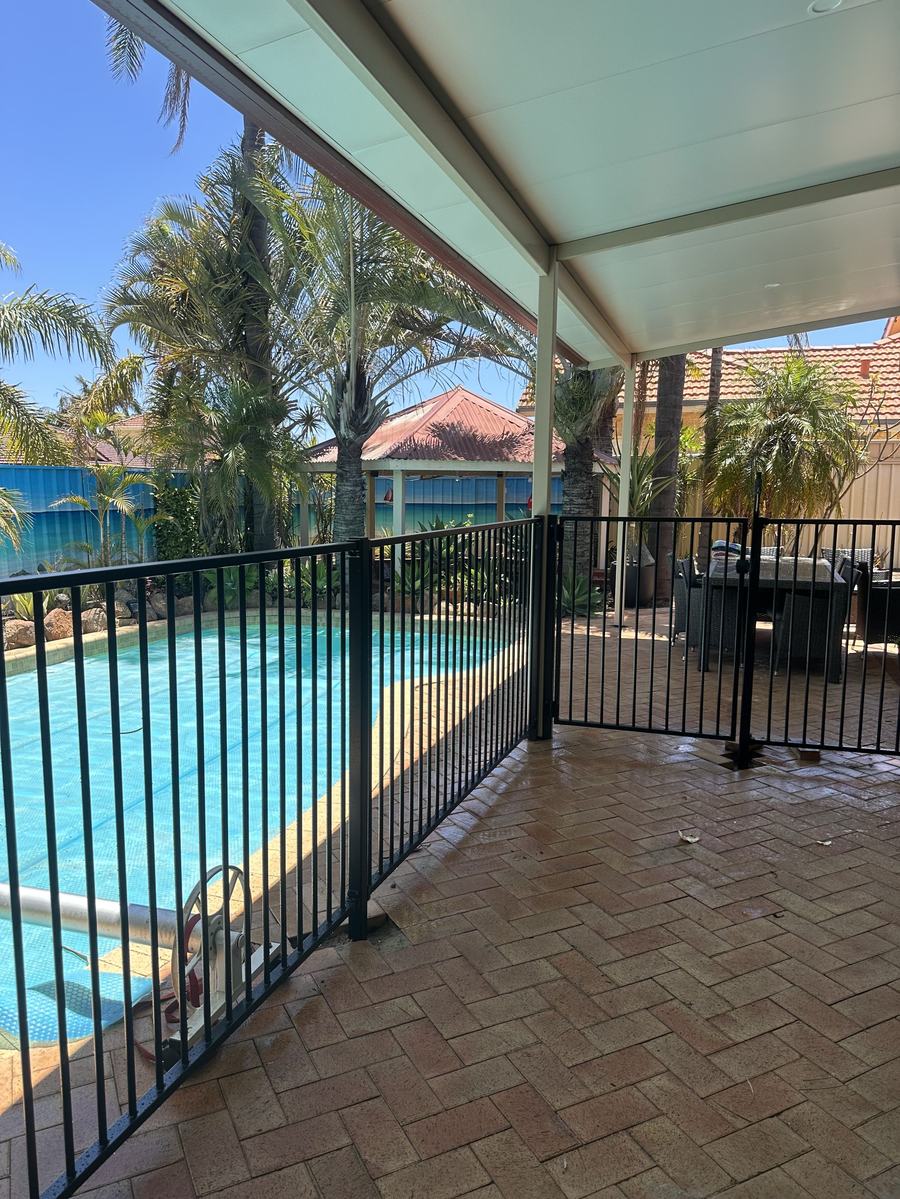
A pool fence that looks right from the patio can still be wrong where it counts. If you need to choose pool fence height, the real question is not just what looks good around the water. It is what keeps the area compliant, secure, practical to use, and in step with the style of your home.
For Perth homeowners, investors and property managers, height affects more than the final appearance. It changes how open the pool area feels, how much supervision you have from the house, how private the space is, and whether the fence works with the rest of the landscape. Get it right and the fence does its job quietly for years. Get it wrong and you can end up with avoidable rework, compliance issues, or a pool zone that feels more closed off than you expected.
Why pool fence height matters more than most people expect
Pool fencing is first and foremost a safety barrier. Height plays a direct role in helping prevent unsupervised access, especially for young children. A fence that is too low, or that works poorly with nearby surfaces and climbable elements, can undermine the whole purpose of the barrier.
That said, safety is only one part of the decision. Height also shapes the visual balance of the area. Around a smaller backyard pool, an overly tall fence can feel heavy and boxed in. Around a larger entertaining space, a fence that is on the low side can look underdone and offer less privacy than you want. The best result usually comes from balancing compliance, usability and design rather than chasing one factor on its own.
Start with compliance before you choose pool fence height
Before comparing styles or materials, start with current pool barrier requirements in your area. In WA, pool fencing rules are not something to treat as a rough guide. They need to be checked carefully against your property, pool type and the date the pool was approved or installed.
This matters because the required barrier standard may depend on site-specific factors, and measurements are not always as simple as taking a tape measure from one obvious point. Ground levels, retaining edges, garden beds, steps and nearby structures can all affect how fence height is assessed.
If you are trying to choose pool fence height based on aesthetics alone, you are starting in the wrong place. Compliance sets the minimum benchmark. From there, you can decide whether going higher makes sense for privacy, wind control or visual impact.
A professional installer can usually spot issues early, such as boundary changes, nearby climb points or awkward falls across the site that could affect the effective height of the barrier.
Minimum height is not always the best height
Meeting the minimum requirement does not automatically mean it is the best option for your property. In many pool areas, the minimum compliant height is enough and keeps the space feeling open. This is often the case with frameless or semi-frameless glass fencing, where preserving sightlines is a major reason people choose the product in the first place.
In other situations, going a little higher can improve the end result. Homes with close neighbours, elevated entertaining areas or strong exposure to wind may benefit from a fence height that offers a greater sense of enclosure. Aluminium pool fencing can be especially flexible here because it gives you more scope to balance visibility, privacy and airflow.
The trade-off is straightforward. As height increases, privacy and security generally improve, but openness can reduce. That is why there is no single best answer for every pool.
Factors that should shape your decision
Pool location and property layout
A fence around a compact courtyard pool has different demands from one around a large family pool in an open backyard. If the pool is close to the house, you may want to keep views clear from indoor living areas so adults can supervise the area more easily. If it sits near a boundary or entertaining zone, more height may help define the space and create a stronger separation.
Sloping blocks also need extra thought. On an uneven site, fence height can look inconsistent if the layout is not planned properly. More importantly, changes in ground level can affect compliance measurements. What seems high enough from one side may not be high enough from another.
Visibility and supervision
A pool fence should create a secure barrier without turning the pool into a blind spot. This is why many homeowners lean towards open-style fencing rather than solid panels around the water itself. If parents or grandparents want a clear line of sight from the alfresco, kitchen or lounge, a compliant height with a more visually open design is often the better choice than simply making the fence taller.
Privacy from neighbours
Some pool areas are exposed from adjoining homes, upper-storey windows or nearby common areas. In those cases, the question is not just how to choose pool fence height, but whether the pool fence should do the privacy work at all. Sometimes a standard compliant fence around the pool combined with separate screening, slatted features or boundary fencing gives a cleaner result than trying to solve privacy with one barrier alone.
This is often the smarter approach because pool fencing and privacy fencing do different jobs. Mixing them carefully can improve both safety and street appeal.
Material and visual weight
Different materials carry height differently. A 1200mm open aluminium pool fence can feel light and unobtrusive. A solid or heavily framed fence at a similar height can feel much more prominent. Glass preserves openness, but it will not create the same privacy as a slatted aluminium design. Powder-coated aluminium offers durability and low maintenance, while also suiting a wide range of modern home styles across Perth and regional WA.
When choosing height, always consider the visual weight of the material as well as the number on paper.
Choose pool fence height with gates and surrounds in mind
Fence panels are only part of the barrier. Gates, latches and surrounding features all influence how well the system performs. A compliant fence can be compromised by poor gate positioning, awkward swings, or landscaping elements that create climbing opportunities.
It is also common for pool owners to focus on panel height and overlook what sits next to the fence. Outdoor furniture, planter boxes, filter equipment, retaining walls and even decorative screens can create issues if they reduce the barrier’s effectiveness.
That is why the fence should be planned as part of the broader pool zone, not as a separate add-on after the paving and landscaping are already locked in.
Design matters - but it works best after the practical decisions
Most clients want a pool fence that feels clean, modern and in step with the home. That makes sense. The pool area is often one of the most visible and most used parts of the property, especially in WA where outdoor living is a major part of how homes function.
Still, design choices work best after the practical groundwork is done. Once you know the compliant height range, understand the site constraints, and decide how much openness or privacy you want, the style becomes much easier to narrow down.
For a contemporary home, black aluminium fencing often delivers a sharp, low-maintenance finish without overpowering the space. For premium entertaining areas, glass can keep sightlines open and make the pool feel larger. For homes that need a bit more screening, combining compliant pool fencing with adjacent slat or boundary fencing can create a more resolved look.
This is where an experienced installer adds value. The right recommendation is not just about meeting code. It is about making sure the finished fence suits the house, the layout and the way the area is actually used.
When it pays to get advice early
If you are building a new pool, renovating an older one, or updating fencing as part of a larger landscaping project, get advice before materials are ordered and surfaces are finished. Small site details can affect the best fence height, and changes are always easier on paper than after installation starts.
For owners who want a fast, reliable result, early planning also helps avoid delays. You can line up the right product, confirm measurements properly and keep the job moving. That matters whether the property is a family home in Perth, an investment in Bunbury, or a holiday property in Busselton.
A specialist installer like Perth Fence Pro can help assess the site, explain the options clearly and recommend a pool fencing solution that is durable, compliant and suited to the look of the property.
The right height is the one that does not leave you second-guessing later - it feels secure, looks right from day one, and keeps working long after the last trades have packed up.