
A damaged gate, an easy climb point or an unprotected rear boundary can turn a well-run commercial site into an avoidable security risk. This commercial security fencing guide explains how Perth business owners, developers and property managers can select fencing that protects people, stock and equipment without making the property look like a fortress.
The right answer is rarely just “the tallest fence”. A useful security fence works as part of the whole site: it defines the boundary, controls who can enter, gives staff clear sightlines and stands up to Perth’s heat, coastal air and day-to-day use. The best outcome balances security performance with access requirements, budget and the appearance of the premises.
Start with the risk, not the fence style
Before choosing a material or panel height, look at what the fence needs to prevent. A warehouse holding valuable stock has different needs from a childcare centre, strata car park, construction compound or office yard. Consider where people currently enter, where a vehicle could gain access and whether there are secluded areas that are difficult to supervise.
For many commercial properties, the weak point is not the main street frontage. It is often a side passage, rear service area, bin enclosure or gate that is left unsecured after hours. Mapping these areas first helps avoid spending heavily on an impressive front fence while leaving an obvious access point elsewhere.
Think about the level of deterrence required. A boundary fence may simply need to make casual trespass difficult. Higher-risk sites may need to resist climbing, cutting or forced entry, with controlled gate access and enough visibility for cameras and staff. The fence design should match the likely risk, rather than adding features that do not solve a real problem.
Commercial security fencing guide: choosing the right system
Commercial security fencing is available in several formats, and each suits a different type of site. The material, mesh or rail layout, height, post system and gate hardware all affect the finished level of protection.
Welded mesh and tubular steel fencing
Welded mesh security panels are a practical choice for warehouses, schools, industrial yards and commercial compounds. The rigid panel construction creates a clean, professional boundary that is difficult to force apart. Mesh also maintains visibility across the site, which supports passive surveillance and CCTV coverage.
Tubular steel fencing can offer a more architectural finish for offices, retail premises and strata developments. It provides a clear physical boundary without closing off the property visually. The spacing between uprights, rail design and fence height should be selected with anti-climb performance in mind, particularly around public-facing boundaries.
Both options can be powder-coated in colours that suit the building and surrounding streetscape. Black is often chosen for visibility through the fence, while Monument and similar darker finishes can complement contemporary commercial buildings. The right colour can make a security boundary look considered rather than purely industrial.
Chain mesh fencing for large or practical sites
Chain mesh remains a cost-effective option for large perimeters, sporting facilities, storage yards and temporary works areas. It is adaptable, fast to install over long runs and can be paired with higher posts, top rails, barbed wire or other site-specific additions where appropriate.
Its trade-off is appearance and privacy. Standard chain mesh can look more utilitarian than panel fencing and offers little screening. For a rear compound, that may be entirely suitable. For a frontage seen by customers, a more refined fence system or carefully designed screening may deliver a better result.
Colourbond and solid boundary fencing
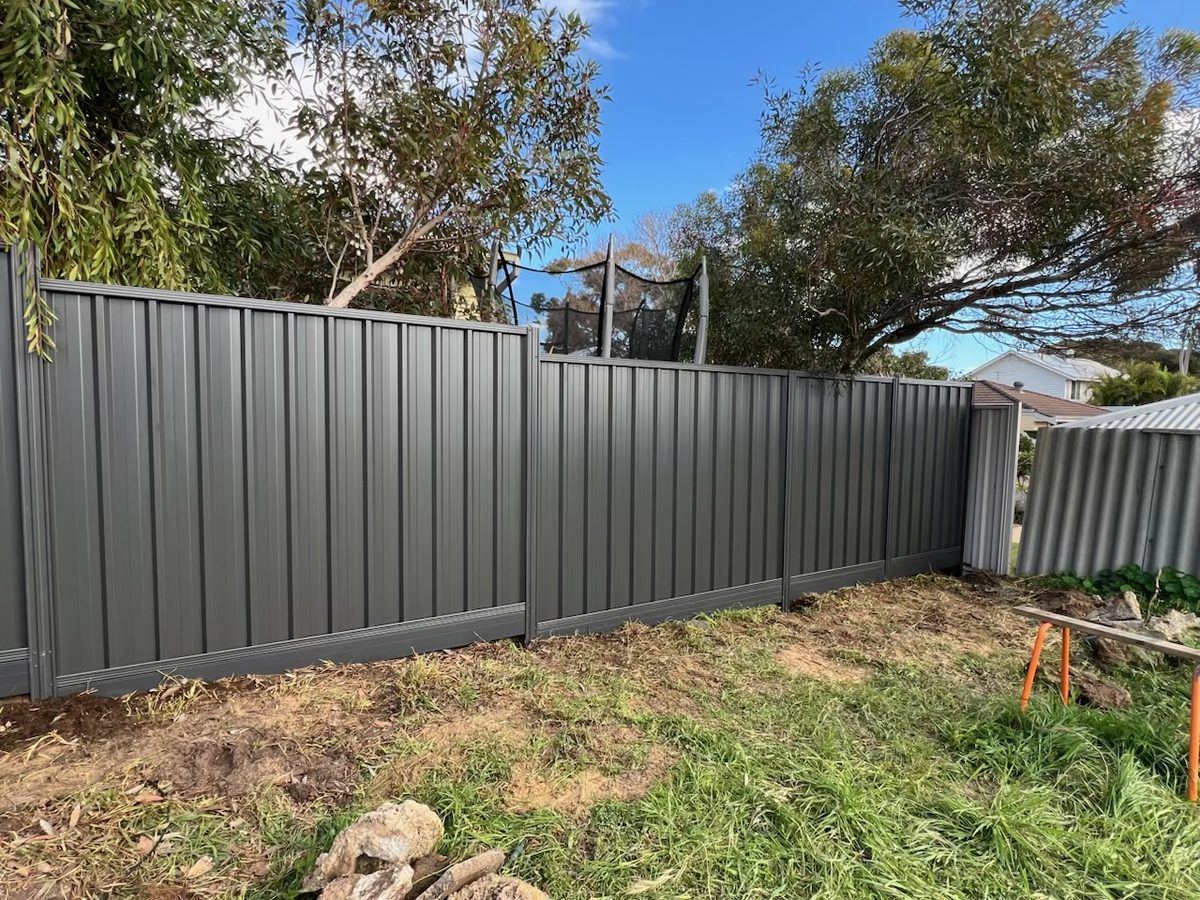
Colourbond fencing is widely used across Perth because it is durable, low-maintenance and provides excellent visual screening. It can be a sensible security solution where privacy matters, such as service yards, staff areas and side boundaries next to neighbouring properties.
However, solid fencing needs careful planning. It blocks views into the site as well as views out, which can create hiding places if lighting and camera positioning are poor. A combination can work well: open, visible security fencing on the street frontage and solid Colourbond fencing around private operational areas.
Height, visibility and anti-climb design
Fence height is a major part of security, but it should be determined by the site, local requirements and intended use. Taller fencing can improve deterrence, yet it may require planning consideration or affect sightlines near driveways, streets and pedestrian areas. A professional site assessment can identify these issues before installation begins.
Avoid adding easy footholds near the perimeter. Stored pallets, skips, air-conditioning units, low structures and dense landscaping can all help someone climb a fence that would otherwise be effective. Keep clear space around vulnerable boundaries where possible, particularly at corners and near gates.
Visibility is equally valuable. Open-style mesh or tubular fencing allows staff, neighbours and cameras to see activity near the boundary. Where privacy is needed, use screening strategically rather than covering every metre of the fence line. Lighting should illuminate entry points, vehicle gates and rear access areas without causing unnecessary glare for neighbouring properties.
Gates are the point that matters most
A commercial security fence only performs as well as its gates. A strong fence with a lightweight pedestrian gate, poor latch or loose hinge leaves the site exposed. Gates should be matched to the fence system and built for the way the property operates every day.
Pedestrian gates may need self-closing hinges, keyed access, keypad entry, intercoms or electronic access control. Vehicle gates can be sliding, swinging or cantilevered depending on driveway space, traffic frequency and ground conditions. Sliding gates are often practical where a swing gate would obstruct vehicles or reduce usable hardstand space.
For busy sites, consider how deliveries, staff, contractors and emergency access will be managed. A gate that is secure but inconvenient will eventually be propped open. Clear access procedures, reliable hardware and a design that suits actual traffic flow are better long-term security measures than relying on staff to work around an awkward entry point.
Plan for Perth conditions and ongoing maintenance
Perth’s strong sun, seasonal rain and coastal conditions can be demanding on outdoor metalwork. Quality powder coating, galvanised steel components and appropriate fixings help protect a commercial fence from corrosion and wear. Properties near the coast should pay particular attention to material specification and maintenance, as salt exposure can shorten the life of poorly selected products.
Low-maintenance does not mean no maintenance. Regular checks can catch loose fixings, gate sag, damaged panels, worn latches and vegetation pressing against the fence before they become larger problems. After storms, construction activity or a vehicle impact, inspect the affected area promptly. A damaged section can undermine both the physical barrier and the deterrent value of the entire boundary.
It also pays to plan for future changes. If the site may add cameras, access control, extra parking or a new building, allow for cable routes, gate automation and possible fence extensions during the initial design. This is usually easier and more cost-effective than retrofitting a system once the fence is complete.
Balance security with presentation and compliance
Commercial fencing is often the first part of a property visitors see. For retail sites, medical premises, offices and multi-unit developments, the fence should support a professional first impression as well as security. Clean lines, consistent powder-coated finishes and well-integrated gates help a site look organised and well managed.
At the same time, do not assume one design is suitable everywhere. Boundary fence rules, planning requirements, pool barrier obligations, fire access and sightline considerations can vary by location and property use. Developments, strata properties and sites close to public roads may have additional requirements. Checking the relevant approvals and standards before work starts prevents costly changes later.
A capable installer will assess levels, soil conditions, existing structures, access for equipment and the relationship between the new fence and neighbouring boundaries. These details affect post depth, drainage, gate alignment and the fence’s long-term performance.
For Perth, Bunbury and Busselton commercial properties, Perth Fence Pro can help turn a broad security requirement into a practical fence and gate solution tailored to the site. A clear site inspection and detailed quote give you the opportunity to protect the areas that matter most, choose materials suited to local conditions and create a boundary your team can rely on every day.