
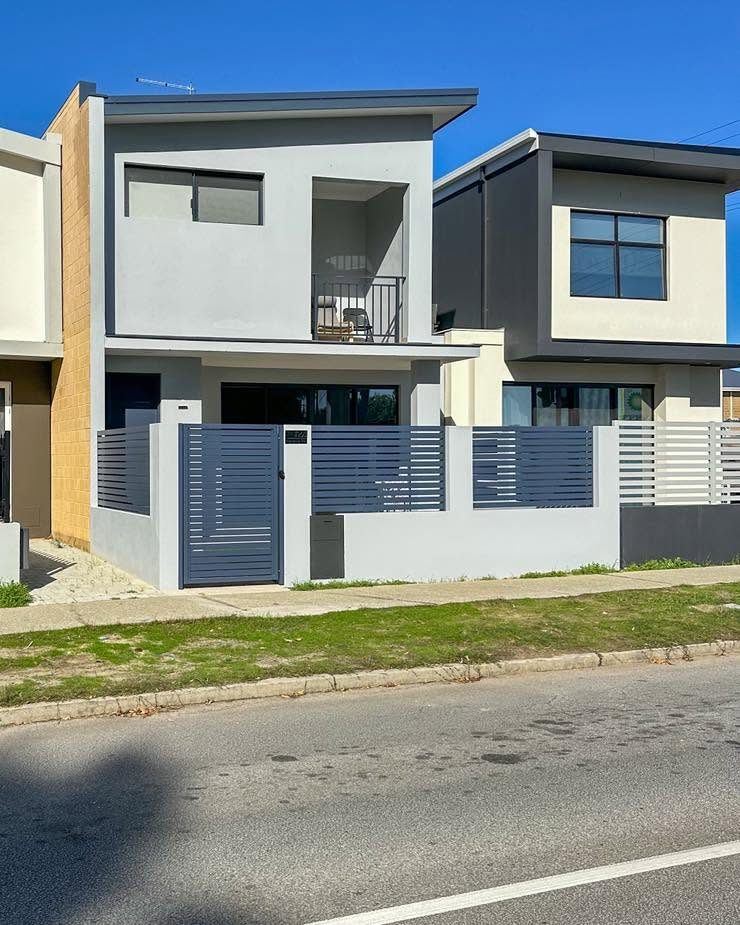
A front boundary fence can change the feel of a property before anyone reaches the door. When weighing up slat fencing vs timber, Perth homeowners are usually balancing three things: the look they want, the maintenance they can live with, and how the fence will perform through years of sun, wind and occasional coastal salt.
Both materials can create privacy, define a boundary and lift street appeal. The better choice depends on the location of the fence, the style of the home, your budget and whether you want a natural finish or a more contemporary, low-maintenance solution.
Slat fencing vs timber: the key difference
Aluminium slat fencing is a fabricated screening system made from horizontal or vertical aluminium sections fixed to a frame. It is designed for clean lines, consistent spacing and a modern finish. Slats can be adjusted to provide anything from partial screening to near-total privacy, making them popular for front fences, side boundaries, courtyards, bin enclosures and pool-adjacent areas.
Timber fencing uses treated pine, hardwood or timber-look components to create a traditional boundary. It suits established gardens, character homes and properties where a softer, more organic appearance is the priority. Timber can be built as paling fencing, horizontal boards, battens or custom screens, depending on the design.
The contrast is simple. Aluminium slats offer a neat architectural look with limited upkeep, while timber delivers warmth and flexibility but needs more attention over its lifespan.
Appearance and street appeal
For modern Perth homes, aluminium slats often make the strongest visual statement. Their even lines work particularly well with rendered walls, brick piers, Colorbond roofs and contemporary facades. Powder-coated finishes are available in a broad range of colours, so the fence can match window frames, gates, garage doors or exterior trims rather than sitting apart from the rest of the home.
Slat spacing is one of its biggest design advantages. A narrow gap creates privacy while still allowing air movement. Wider gaps can soften the boundary, retain visibility from the driveway and reduce the closed-in look of a solid fence. This is useful where a front fence needs to offer security without making the property feel boxed in.
Timber has a different appeal. It brings texture and natural variation that aluminium cannot replicate exactly. A timber screen can suit a cottage garden, a coastal-inspired home or a backyard with mature planting. It can also be painted or stained to suit changing tastes, although this flexibility comes with ongoing work.
If consistency matters, aluminium generally wins. Timber can weather unevenly, fade in strong sun and develop knots, splits or movement over time. Some owners love that lived-in character. Others would rather keep the fence looking sharp with a simple wash-down.
Maintenance in Perth conditions
Perth's dry heat and intense UV exposure are demanding on exterior timber. Even quality treated timber needs regular inspection, especially on sun-facing boundaries. Paint, oil or stain may need refreshing to protect the surface and maintain its appearance. Without upkeep, timber can grey off, crack, warp or show early deterioration around fasteners and ground contact points.
Aluminium slat fencing is built for lower maintenance. A periodic rinse with clean water and mild detergent is normally enough to remove dust, cobwebs and garden residue. Powder coating gives the surface a durable finish without the need for routine painting or sealing.
This is particularly valuable for rental properties, commercial sites and busy households that want a reliable boundary without adding another weekend job to the list. It also makes aluminium a practical choice for fences behind landscaping, where access for repainting or repairs can be awkward.
Coastal properties need extra consideration. Salt-laden air can affect many external materials over time. Quality powder-coated aluminium, correctly specified and installed, is a strong option for coastal areas, but the fence should still be cleaned regularly to remove salt deposits. Timber near the coast needs careful protection and more frequent maintenance to help manage moisture movement and surface wear.
Privacy, airflow and security
A fence should do more than look good. It needs to work for the way you use the property.
Slat fencing gives you control over the balance between privacy and airflow. Closely spaced horizontal slats can obscure views into a courtyard or front garden while allowing breezes to pass through. That can be a real benefit in Perth, where outdoor living areas need shade and privacy without becoming hot, stagnant spaces.
Timber paling fencing provides strong visual privacy when built without gaps. It is a dependable choice for side and rear boundaries, particularly where neighbouring homes are close together. However, a solid timber fence can catch more wind than an open slat design. The posts, footings and fixing method must be suitable for the fence height, exposure and local conditions.
For security, neither material should be assessed by appearance alone. Fence height, gate hardware, frame strength, footing depth and access points all matter. Aluminium slats can be paired with lockable pedestrian gates, sliding gates and secure latches for a clean, coordinated frontage. Timber can also be secure, but hinges, latches and gate frames need regular checking as the timber moves with age and weather.
Upfront cost and long-term value
Timber is often the more affordable option at the start, especially for a straightforward paling fence on a standard residential boundary. It remains a sensible choice when the main goal is functional privacy on a tighter budget.
Aluminium slat fencing generally has a higher upfront cost because it involves engineered sections, powder coating, fabrication and a more design-led installation. Gates, custom heights, feature posts and stepped levels can also affect the final price.
The initial quote is only part of the decision. Over time, timber may require painting, staining, board replacement, repairs to loose palings and eventual renewal. Aluminium costs more to install but can offer better long-term value where low maintenance, consistent appearance and durability are priorities.
For investors, this can be a practical calculation. A fence that presents well and needs limited attention between tenancies can support the property's appeal while reducing maintenance calls. For owner-occupiers, the value may be more about enjoying a finished outdoor area rather than planning the next round of fence maintenance.
When timber is the better choice
Timber is not an inferior option. It is often the right solution where a natural style is central to the property or where budget needs to be directed to a long rear boundary. It can be easy to repair in sections, and it works well with planting, trellises and informal garden layouts.
Choose timber when you want a classic boundary fence, are happy to maintain the finish, and prefer the variation and warmth of a natural material. It can also be a good fit where neighbouring fencing needs to be matched for a consistent look.
The key is to use suitable materials and ensure the structure is installed properly. Good post spacing, quality fasteners, adequate clearance from soil and correct drainage all have a major impact on timber fence life.
When aluminium slat fencing is the better choice
Aluminium slats suit homeowners who want a contemporary fence with strong street appeal and less ongoing work. They are especially effective for front boundaries, entry screens, side passages, patios and feature sections where the fence is highly visible.
They are also a smart choice when privacy needs to be tailored rather than treated as all or nothing. The ability to select slat widths and gaps gives you more control over sightlines, airflow and the overall feel of the space.
For commercial properties, strata sites and modern developments, aluminium slats can create a polished, consistent finish across multiple lots or entry areas. They can be integrated with gates and screening elements for a complete boundary solution.
Installation details that affect the result
The material is only half the job. A well-designed fence can still underperform if the posts, footings, alignment and gate hardware are not right.
Slat fencing needs accurate set-out to keep lines level, gaps even and gates operating smoothly. On sloping blocks, the installer should discuss whether the fence will step with the land or follow the slope, as this changes both appearance and privacy. Timber needs the same attention to levels, post depth and drainage, particularly where the boundary is exposed to wind or the ground holds moisture.
Before work starts, check boundary locations, local council requirements and any strata or estate design rules. If the fence forms part of a pool barrier, it must meet the applicable pool safety requirements. A decorative screen should never be assumed to be compliant simply because it looks secure.
A site measure is the best way to make the decision with confidence. Perth Fence Pro can assess the layout, exposure, privacy needs and preferred finish, then recommend a fencing option that suits the property rather than forcing a one-size-fits-all answer. The right fence should look at home from day one and remain easy to live with long after the installation is complete.