
A fence in Perth has to do more than mark a boundary. It has to handle harsh sun, coastal air, strong winds and day-to-day wear while still looking right for the property. That is why a Perth fencing material guide matters - the best choice is not just about price, but how the material performs in WA conditions, how much upkeep it needs, and what it adds to privacy, security and street appeal.
If you are comparing options for a home, investment property, strata site or commercial premises, the smartest starting point is the material itself. Style can be adjusted later. Performance cannot.
How to use this Perth fencing material guide
The right fencing material depends on what the job needs to do first. If privacy is the priority, your shortlist will look different to a pool enclosure or a front fence designed to lift presentation. Some owners want the fastest low-maintenance option. Others are prepared to spend more for a premium architectural finish.
In Perth and surrounding WA regions, climate also plays a big part. Heat, UV exposure and salt can shorten the life of poor-quality products or make some finishes harder to maintain. A material that looks good on day one is only a good investment if it still performs well in a few years.
Colorbond fencing - practical, private and built for modern blocks
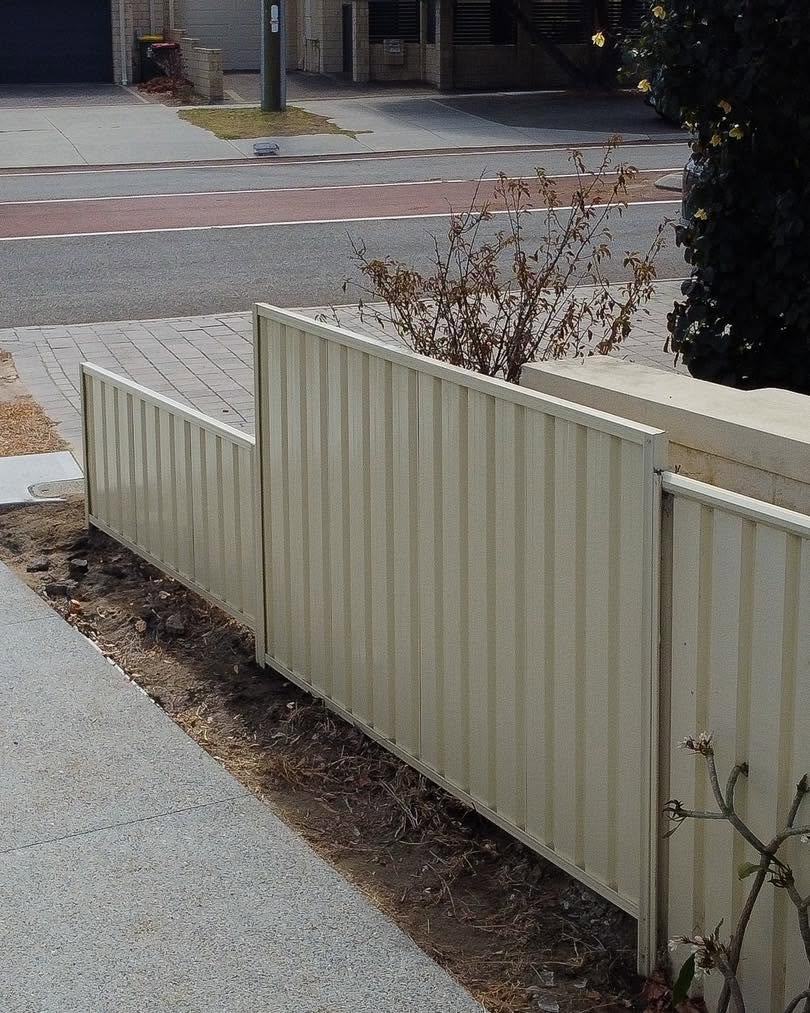
Colorbond remains one of the most popular fencing choices across Perth for good reason. It delivers full boundary privacy, has a clean modern look and suits both new builds and older homes being updated. For side and rear boundaries, it is often the most straightforward answer when owners want durability without ongoing maintenance.
It is especially well suited to suburban residential properties where neighbours are close and privacy matters. It also works well for investment properties because there is no painting, no paling replacement and very little ongoing attention required.
The trade-off is that Colorbond is more functional in appearance than decorative, unless it is paired with a front feature fence, slat infill or matching gates. It is excellent for secure, private perimeters, but not always the first choice if you want a softer or more traditional frontage.
PVC fencing - low-maintenance with a cleaner decorative finish
PVC fencing suits owners who want a crisp, tidy look without the upkeep that comes with timber. It is popular for Hamptons-inspired homes, front boundaries and areas where presentation is just as important as separation. It does not need repainting and it handles everyday weather exposure well when quality materials are used.
This makes PVC attractive for busy households and landlords who want a neat finish that stays consistent over time. It can also work well around gardens, front yards and decorative screening zones where a more refined style is needed.
The main consideration is that PVC is not the right fit for every application. It tends to suit decorative and residential settings better than high-impact security zones. Design and product quality matter too - cheaper options can look lightweight, while better systems create a much stronger result.
Aluminium slat fencing - strong visual appeal with flexible privacy
Aluminium slat fencing has become a leading choice for owners who want more control over the look of the property. It offers a modern architectural finish and can be used for front fencing, pedestrian gates, driveway gates, screening and boundary sections where style matters.
One of its biggest advantages is versatility. Slat spacing can be adjusted to balance privacy, airflow and visibility. That makes it useful for homes that want enclosure without feeling boxed in. Powdercoated aluminium is also low-maintenance and performs well in WA conditions.
It is usually a more design-led option than standard boundary fencing, so budget can be higher depending on layout and customisation. But where appearance is a major factor, aluminium slats often give a stronger return in street appeal than simpler materials.
Pool fencing - safety first, without making the area feel closed off
Pool fencing has a different job from general boundary fencing. Compliance is essential, but so is visibility, access control and the overall feel of the outdoor area. In many Perth homes, the goal is to secure the pool without cutting off the entertaining space or making the backyard feel smaller.
Aluminium pool fencing is a common choice because it is durable, neat and relatively easy to maintain. Glass can also be considered where uninterrupted views are the priority, although it usually requires more cleaning to keep it looking sharp.
For pool areas, the right material is not just about looks. Gate hardware, latch quality and installation accuracy are just as important as the fence panels themselves. A good pool fence needs to be safe, compliant and reliable every day, not only on inspection day.
Security fencing - when protection is the main priority
For commercial sites, unit complexes, schools, warehouses and some residential properties, security fencing is often the main requirement. In these cases, the material needs to do more than define a boundary. It needs to deter access, handle heavy use and support secure entry points.
Steel and aluminium security systems are common here, depending on the site and the level of protection needed. Tubular fencing, spear-top styles, heavy-duty gates and controlled access hardware all come into play.
The visual finish still matters, particularly on customer-facing or mixed-use sites, but security fencing is first and foremost about strength and function. If the property is exposed or stores equipment, stock or vehicles, choosing on appearance alone can be an expensive mistake.
Timber fencing - where it still fits, and where it does not
Timber still appeals to owners who like a natural look or want a familiar fence style at the front or between properties. It can be cost-effective up front and it suits some older homes well.
But in Perth conditions, timber asks more from the owner. It can fade, warp, split and require repainting or replacement over time, particularly with strong sun and weather exposure. For some projects, that upkeep is worth it. For others, it becomes the reason owners switch to Colorbond, PVC or aluminium later.
If low maintenance is high on the list, timber is usually not the first recommendation.
Matching the material to the property
For family homes
Most homeowners want a balance of privacy, security and appearance. Colorbond works well for side and rear boundaries, while aluminium slats or PVC often suit the front where presentation matters more.
For investment properties
Low maintenance and durability usually lead the decision. Materials that stay straight, clean and functional with minimal upkeep tend to offer better long-term value than options that need regular repairs or repainting.
For new developments
Consistency, speed of installation and a modern finish are often the key priorities. Materials that can be supplied and installed efficiently across multiple lots are usually the strongest fit.
For commercial properties
Security, access control and hard-wearing performance come first. The right system often includes not only the fence itself, but matching gates, hardware and site-specific layout planning.
What people often get wrong when choosing fencing materials
A common mistake is choosing purely on the cheapest quote. The better question is what the fence will cost over the next five to ten years. A lower up-front price can be poor value if the material fades fast, needs frequent maintenance or does not suit the property.
Another issue is choosing a style before understanding the purpose. A front feature fence and a rear boundary fence do not need to solve the same problem. Treating them as one decision can lead to compromises that are unnecessary.
It also pays to think beyond the panels. Gates, posts, hardware, screening details and site conditions all affect how the finished fence performs and how good it looks from the street.
The best Perth fencing material guide is the one that fits the site
There is no single best fencing material for every Perth property. The right choice depends on whether you need privacy, presentation, pool safety, stronger security or simply a durable fence that will not become another maintenance job in six months.
For many homes, that means combining materials rather than forcing one option across the whole block. A practical boundary fence, a more refined front fence and well-matched gates can give you better function and a better finish at the same time.
If you are weighing up options, the most useful next step is to assess the site properly and match the material to the way the space is actually used. That is where an experienced local contractor can save time, avoid costly missteps and deliver a fence that looks right and performs properly long after installation.