
A fence can tidy up a frontage, improve privacy and make a property feel properly finished - right up until a boundary question or council rule slows the job down. That is why understanding fence regulations in Western Australia matters before posts go in the ground. A well-chosen fence should look sharp, last in local conditions and meet the rules from day one.
For most owners, the sticking point is not the fence itself. It is who pays, how high it can go, whether approval is needed and what happens when a neighbour wants something different. The answer depends on the fence type, the location and the local council requirements, so it pays to sort out the basics early rather than fix a non-compliant build later.
How fence regulations in Western Australia usually work
In WA, fencing rules are shaped by a mix of state legislation and local planning policies. The Dividing Fences Act covers many of the issues around boundary fences between neighbouring properties, while local councils often set rules around fence height, materials, visibility near streets and approvals for front fencing.
That means there is no single rulebook that covers every job in exactly the same way. A standard backyard boundary fence in suburban Perth may be straightforward, while a corner block in Busselton or a commercial site in Bunbury can involve extra conditions. If the fence affects sightlines, sits near a road, surrounds a pool or is part of a strata arrangement, the requirements can change quickly.
The practical takeaway is simple. Before you choose a style, confirm whether the fence is a dividing fence, a front fence, a pool barrier or a security fence for commercial use. Each category can trigger different rules.
Boundary fences and neighbour responsibilities
For many residential projects, the first issue is whether the fence sits on the shared boundary. Under the usual approach in WA, adjoining owners can both have responsibilities for a sufficient dividing fence. That does not automatically mean any fence one neighbour wants must be split 50-50. It usually means there is a process around notice, agreement and what counts as a standard sufficient fence for that area.
If you want to replace an old timber fence with something more durable such as Colorbond, it helps to discuss it before work starts. If both parties agree, the project is much easier. If one owner wants a premium upgrade beyond what is considered sufficient, they may need to cover the extra cost themselves.
Disputes often start when one side proceeds too quickly. A contractor can install a fence fast, but the approval between neighbours still needs to happen first when the job is on a shared boundary. Good communication at the start usually saves time, money and frustration later.
What is a sufficient fence?
This is where context matters. A sufficient fence is generally one that is reasonable for the type of land and the local area. In one street that may be a standard Colorbond boundary fence. In another, it may be a more basic finish. For rural, industrial or mixed-use land, the benchmark can be different again.
If the goal is better privacy, security or street appeal, upgrading above the sufficient standard is common. There is nothing wrong with that. You just want the cost split and expectations clearly agreed in writing before installation.
Front fence height and streetscape rules
Front fencing is where many owners get caught out. Local councils often regulate front fence height more closely than side and rear boundaries because the fence affects the streetscape and visibility for vehicles and pedestrians.
In some areas, a low front fence may be exempt from approval, while a taller solid fence may need planning approval. Corner blocks can be even more sensitive because sightlines at driveways and intersections matter. A stylish slat or perforated design may be easier to approve than a fully solid screen if visibility is a concern.
This is one of those situations where design and compliance need to work together. A fence can still provide privacy and present well from the street without creating a planning issue. Materials such as aluminium slats, PVC and selected feature infills can give a cleaner look while keeping the frontage lighter and more open.
Pool fence regulations in Western Australia
Pool fencing sits in a category of its own because the compliance standard is stricter and the consequences of getting it wrong are serious. If you have a swimming pool or spa that requires a safety barrier, the fence, gate and surrounding access points all need to comply with the relevant safety requirements.
That includes gate operation, latch height, climbable objects near the barrier and the overall integrity of the enclosure. A pool fence is not just about the panel height. It is about how the full barrier performs in real use. A gate that does not self-close properly or a nearby fixture that creates an easy foothold can turn a compliant fence into a problem.
For homeowners upgrading an older pool area, it is worth checking whether changes to paving, garden beds, screens or nearby furniture could affect compliance. The fence itself might be fine, but the space around it may not be.
When permits or approvals may be needed
Not every fence needs council approval, but plenty do. Front fences above a certain height, retaining walls combined with fencing, fences on corner lots, heritage-related properties and some commercial security installations can all need extra checks.
Retaining is a common complication. A fence built on top of a retaining wall can be assessed differently from a fence on level ground because the effective height changes. From a compliance point of view, that can turn what looks like a normal boundary fence into a structure that needs approval.
For commercial sites, security fencing may also bring in extra considerations around height, appearance, access gates and relationship to public areas. What works well for a warehouse yard is not necessarily treated the same way as a side boundary at a house.
Choosing materials that suit the rules and the property
Fence regulations in Western Australia do not usually dictate one single material, but the material you choose can affect whether a design is practical to approve, durable to maintain and worth the investment.
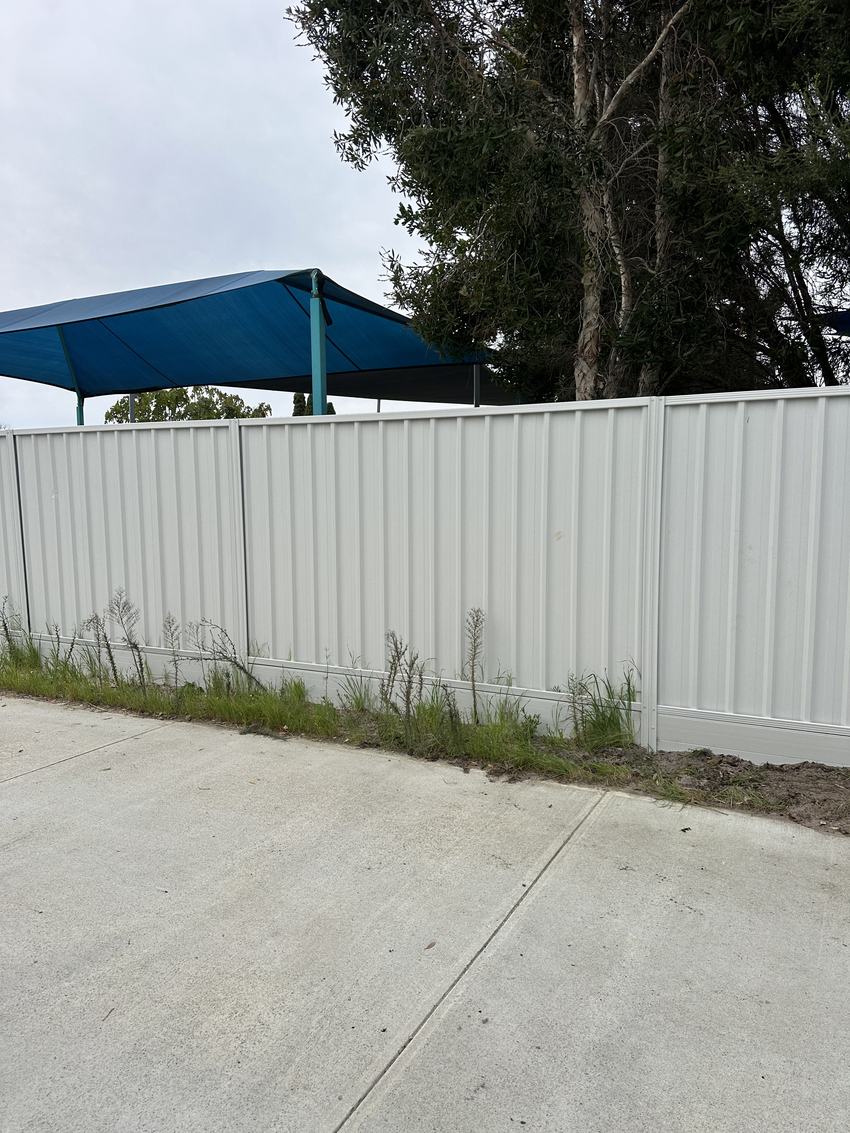
Colorbond remains a popular option because it is clean, durable and low-maintenance. It suits many side and rear boundary applications and gives a neat finish that works across older homes, newer builds and investment properties. PVC can be a strong fit where a lighter decorative look is wanted without constant upkeep. Aluminium slat and perforated styles are often useful at the front because they can balance privacy with airflow and visual openness.
If security is the priority, a heavier-duty steel or commercial-grade solution may be the better call, but it still needs to suit the site and any local planning controls. The best fence is not just the strongest or tallest option. It is the one that fits the purpose, the property and the rules.
Common mistakes that cause delays
Most fence problems start with assumptions. Owners assume the old fence line is correct, assume the neighbour will contribute, or assume a front fence can be built to the same height as a rear boundary. Those assumptions can create expensive rework.
The other common issue is measuring only for appearance and not for compliance. A fence might look perfect on paper, but once levels, retaining and gate hardware are factored in, the finished result can exceed the allowable height or fail a safety standard.
That is why a site-specific approach matters. On-ground levels, block shape, intended use and local council expectations all need to be considered together.
A practical way to approach your fencing project
If you are planning a new fence, start with the purpose. Is it mainly for privacy, pool safety, security, street appeal or defining a boundary? Once that is clear, confirm where the fence sits in relation to title boundaries and whether a neighbour agreement is needed. Then check local council rules for heights, visibility and approvals.
After that, choose a material and style that suits both the property and the compliance requirements. This is where working with an experienced local fencing contractor can make the process smoother. A team that regularly installs Colorbond, pool fencing, slat screens and security fencing across WA is more likely to spot issues early and recommend an option that looks good and holds up well.
At Perth Fence Pro, the most successful projects are usually the ones where compliance and design are considered together from the start. That leads to a faster install, fewer surprises and a finished fence that does its job properly.
If you are investing in a fence, treat the rules as part of the build, not a hurdle after the fact. The right advice early on can give you a boundary that is secure, durable and well suited to the way your property is meant to look and work.