
A fence that performs well in inland Perth can show its weaknesses quickly near the coast. Salt carried on the breeze, abrasive sand, strong winds and regular moisture all place extra pressure on posts, panels, fixings and gates. The right coastal fencing material choices protect more than a boundary line - they help preserve privacy, security and street appeal without creating a high-maintenance job.
For homes and commercial sites in Perth's western suburbs, Bunbury, Busselton and other coastal WA locations, the best material depends on how exposed the property is. A sheltered block several streets from the beach has different demands from a front fence facing open dunes or a side boundary that receives daily sea spray.
What coastal conditions do to fences
Coastal fencing needs to handle more than rain. Salt deposits hold moisture against metal surfaces and can speed up corrosion, particularly where paint has been scratched or untreated steel is exposed. Wind can work loose panels and posts over time, while sand can wear at moving gate parts, latches and hinges.
The installation detail matters as much as the panel material. Correct post depth, suitable footings, well-designed gate bracing and corrosion-resistant fixings all contribute to a fence that stays straight and secure. Choosing a premium panel but using unsuitable screws or hardware is a false economy in a salt-air environment.
Coastal fencing material choices that suit WA properties
Colourbond steel for privacy and practical performance
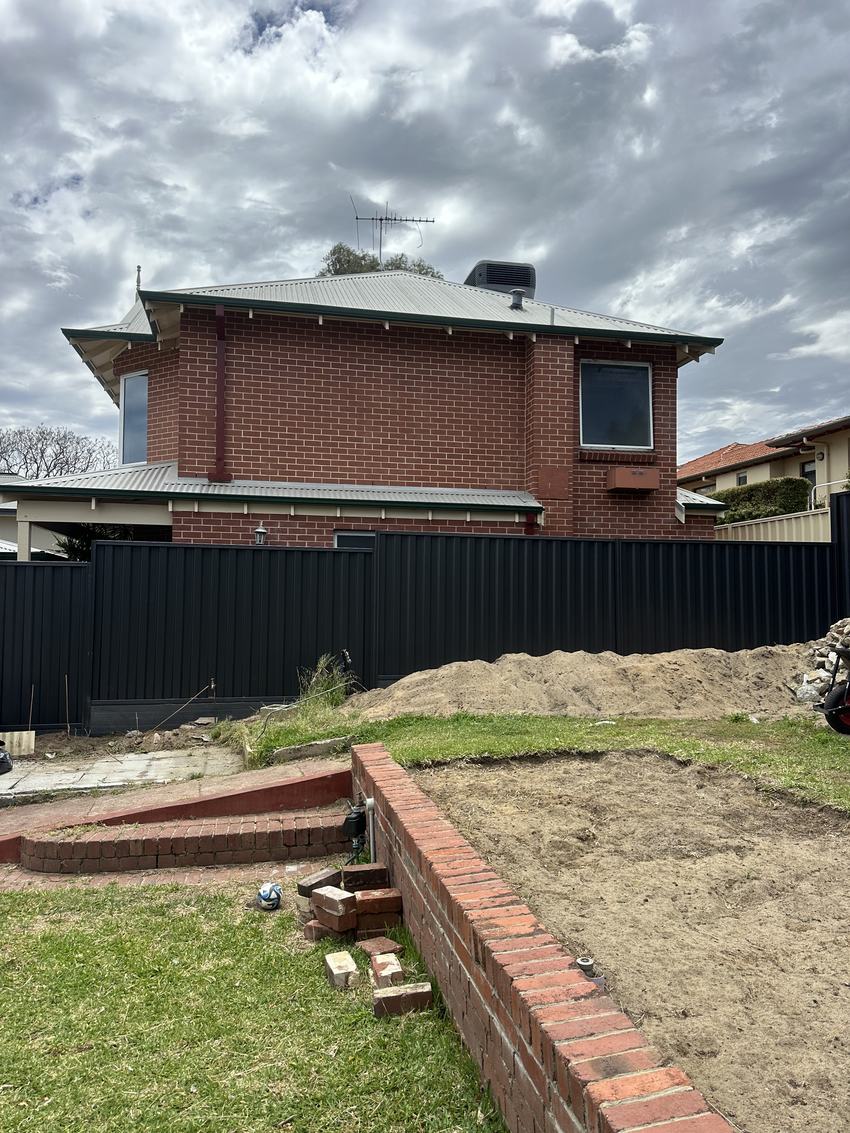
Colourbond fencing remains a strong option for many coastal properties because it is private, clean-lined and low maintenance. Quality pre-painted steel panels offer a modern finish and do not need regular repainting like timber. They are also available in colours that work well with contemporary coastal homes, established suburbs and commercial boundaries.
For exposed locations, the specification needs careful attention. Choose products designed for the local environment and make sure cut edges, fasteners and post systems are suited to coastal use. Regularly rinsing the fence with fresh water helps remove salt build-up, especially on properties close to the shoreline.
Colourbond is well suited to side and rear boundaries where privacy is the priority. It can also be paired with slat screening, masonry piers or a feature gate to give a front boundary more architectural character. The trade-off is that solid panels catch wind, so post spacing and footing design are particularly important on open sites.
Aluminium slat fencing for a modern coastal look
Aluminium slat fencing is a popular choice where homeowners want privacy without the visual weight of a full solid fence. It has a crisp, contemporary look and works particularly well around entry areas, courtyards, patios and pool surrounds. Slat spacing can be adjusted to increase screening or allow more airflow and filtered light.
Aluminium does not rust in the same way as untreated steel, making it a practical material for salt-prone areas. A quality powder-coated finish provides extra protection and gives you a broad choice of colours. It is still worth washing down periodically, as salt, grime and sand can dull any coated surface over time.
The main consideration is strength and design. Wider slat spans or poorly braced gates can flex in strong winds. A professional installation with correctly sized posts and well-supported frames makes the difference, particularly along the coast.
PVC fencing for low-maintenance boundary style
PVC fencing suits owners who want a tidy, painted-timber appearance without the ongoing sanding, staining or repainting. It is often chosen for Hamptons-style homes, front boundaries and garden fencing where a light, classic finish is part of the overall design.
It will not rot, and it is not affected by termites or rust. That makes PVC an attractive low-maintenance option in coastal areas. It can be cleaned with a mild wash to remove salt residue and everyday marks.
Not every PVC product is equal. Look for quality UV-stabilised systems that are designed to cope with WA sun, and ensure the fence is properly reinforced where required. PVC is generally better suited to decorative and semi-private applications than high-security boundaries. If your site receives severe wind exposure, the layout and reinforcement should be assessed before selecting it.
Powder-coated aluminium pool fencing
For pool areas, aluminium fencing offers a safe, streamlined option that keeps sightlines open. It does not obstruct views across a yard, and a powder-coated finish can complement window frames, roofing and outdoor entertaining areas. It is also a sensible choice near the coast because aluminium resists rust.
Pool fencing must meet applicable safety requirements, including correct height, gaps, gate operation and non-climbable zones. Coastal conditions add another layer of maintenance: check hinges, self-closing mechanisms and latches regularly, as sand and salt can affect moving parts. A gate that does not close and latch reliably needs prompt attention.
Frameless or semi-frameless glass can also suit premium coastal homes where a view is central to the design. Glass creates an open finish, but it requires more frequent cleaning to keep salt film and water spots under control. Stainless steel spigots, clamps and fixings must be selected for the exposure level rather than treated as an afterthought.
Security fencing for commercial and higher-risk sites
Commercial premises, strata properties, storage yards and side access areas may need more than privacy. Tubular steel, aluminium security fencing, welded mesh and automated gate systems can create a defined, durable perimeter while maintaining visibility over the site.
Near the coast, avoid assuming every metal security fence has the same level of protection. Galvanising, powder coating, hardware quality and the treatment of welds all affect long-term durability. A fence that is difficult to climb but begins corroding at the base or around fixings will not deliver lasting value.
For these projects, consider how the fence works with access control, pedestrian gates, vehicle entry and lighting. Security is strongest when the entire boundary has been planned as one system rather than assembled from separate products.
Materials that need more upkeep by the sea
Timber can look excellent around coastal homes, particularly when used as a feature fence or screening element. However, it needs a realistic maintenance plan. Salt air, sun and moisture can lead to weathering, splitting and fading, while posts and rails need ongoing inspection. Using durable timber species, appropriate sealants and protected steel fixings can extend its life, but timber is rarely the lowest-maintenance coastal option.
Untreated or lightly coated mild steel should also be approached carefully. It may be suitable for sheltered decorative details with the right protective finish, but it is not the first choice for an exposed boundary close to the ocean. The cost of repeated repair can outweigh the initial saving.
Do not overlook posts, gates and fixings
The visible fence panels receive most of the attention, yet failures often begin at the connection points. Coastal projects should use appropriate corrosion-resistant screws, hinges, brackets and latches. Gate frames need sufficient strength to prevent sagging, and posts need footings designed for local soil and wind conditions.
Ask your installer how the gate hardware suits the location, particularly if the gate is close to a beach access path or regularly exposed to sand. Also consider drainage around posts and fence lines. Standing water and trapped debris can shorten the life of otherwise good materials.
Choosing the right finish for your property
Start with the fence's main job. A rear boundary may need full privacy, while a front fence may need to frame the home without making the block feel closed in. A pool barrier must prioritise compliance and reliable gate operation. A commercial site may require visibility and controlled access as much as physical strength.
Then assess exposure honestly. The closer you are to the water, and the more direct wind your block receives, the more valuable a corrosion-conscious material and installation become. Colour, profile and screening style should follow that practical decision, not replace it.
Perth Fence Pro can help match the fencing system, gate hardware and installation method to the demands of your site. A clear quote based on your location, layout and desired finish gives you a better path to a fence that still looks sharp after many summers by the coast.