
A fence can look solid on day one and still struggle after the first run of strong coastal winds. In Perth, Bunbury and Busselton, choosing the best fences for windy areas is less about picking the heaviest panel and more about getting the design, materials and installation details right.
Wind puts pressure on every part of a fence - panels, posts, rails, fixings and gates. If the fence is too solid, poorly anchored or installed without enough consideration for local conditions, it can lean, rattle or fail early. The right fence needs to handle gusts without becoming a maintenance headache, while still giving you the privacy, security and street appeal you want.
What makes a fence work in windy conditions?
The biggest mistake people make is assuming a fully solid fence is always stronger. In some sites, especially open blocks or coastal areas, a fence that catches the full force of the wind can be under more stress than one designed to let some airflow pass through.
That does not mean privacy fencing is off the table. It means the fence has to suit the block. Wind exposure, soil type, fence height, post depth, return panels, gate placement and nearby structures all affect performance. A suburban backyard tucked behind neighbouring homes has different demands from a corner block, a rural edge property or a site close to the coast.
Materials matter too, but they are only part of the picture. A quality product installed properly will usually outperform a poor installation using a premium material. That is why the post spacing, footing depth and frame strength deserve as much attention as the panel style.
Best fences for windy areas: what actually performs well?
Colorbond fencing
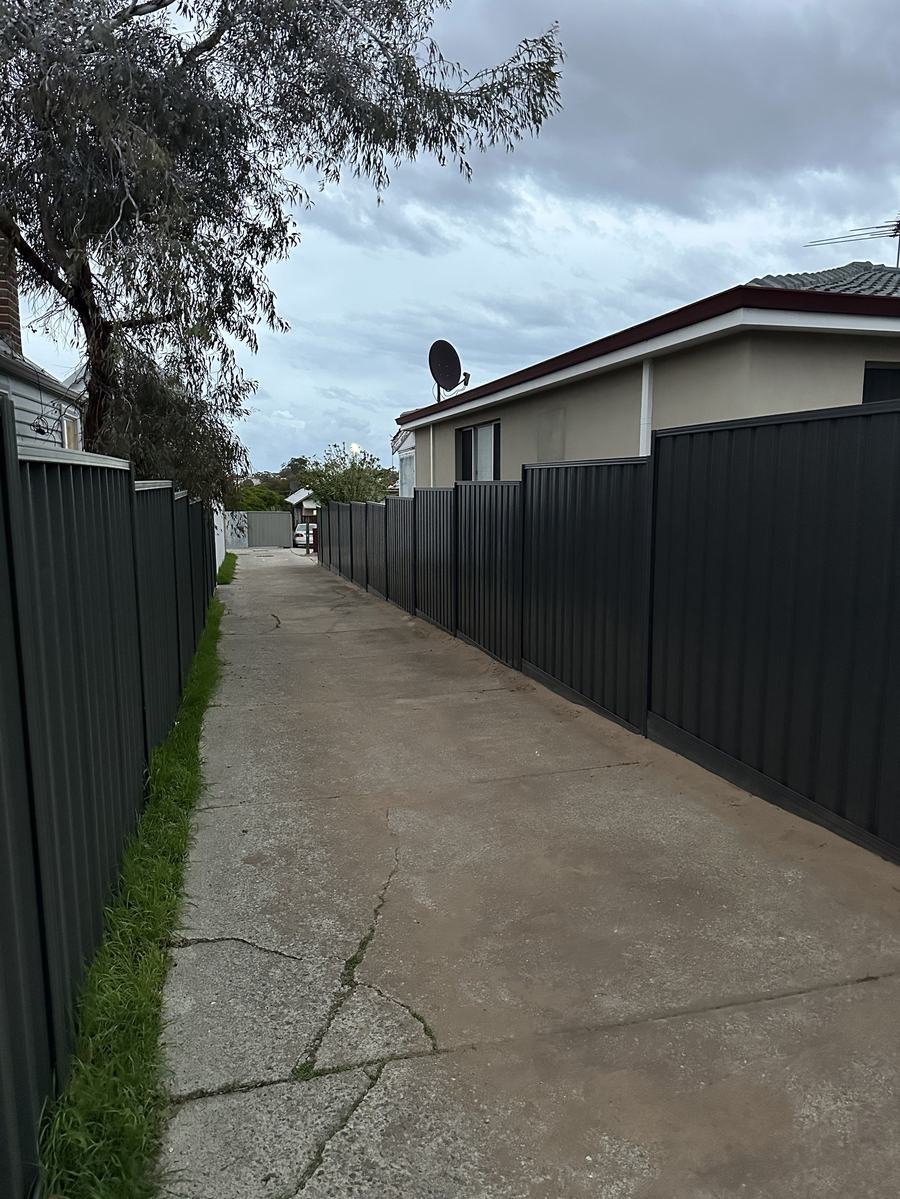
Colorbond fencing is one of the strongest all-round options for WA conditions, especially when you want privacy, durability and a clean modern look. It is popular for good reason. Steel panels are built for Australian conditions, they do not rot or get eaten by termites, and they are relatively low-maintenance once installed.
For windy areas, Colorbond performs well when the fence is specified and installed correctly. Strong posts, proper footing depth and quality rails make a big difference. On many residential blocks, it offers the right balance of privacy and strength without the upkeep that comes with timber.
There is a trade-off, though. Because it is a more solid style, wind load needs to be taken seriously. On exposed sites, extra engineering considerations may be needed, especially for taller runs or long uninterrupted sections. If you want full privacy on a windy block, this is often still a very good option - it just needs to be done properly.
Aluminium slat fencing
Aluminium slat fencing is one of the best fences for windy areas when airflow is a priority. The gaps between slats reduce pressure on the fence, which can make it a smarter choice for exposed front boundaries, screening areas and modern homes in breezy locations.
It also brings a strong visual result. Slat fencing suits contemporary properties, works well with gates and screening features, and offers a neat balance between openness and privacy. Aluminium does not rust like untreated steel can, which is a real advantage in coastal environments.
The key here is spacing. Wider gaps allow more air through but reduce privacy. Narrower gaps increase privacy but also increase wind resistance. That is why slat fencing is rarely a one-size-fits-all product. The best result comes from matching the slat profile and spacing to the site rather than choosing purely on appearance.
PVC fencing
PVC fencing can work well in windy areas, particularly for homes where low maintenance is a major priority. It does not need repainting, it will not rust, and it handles day-to-day weather exposure well when the product quality is good.
In terms of wind, the design matters more than the material alone. A semi-open PVC style is generally better suited to exposed conditions than a fully solid panel. For decorative boundary fencing, Hamptons-inspired profiles and picket-style options often cope better with airflow than broad solid sections.
PVC is often chosen for its clean appearance and easy upkeep, but not every PVC product is equal. Thinner or lower-grade systems may not perform as well in harsher WA conditions. If wind exposure is high, the internal structure and post system need close attention.
Security fencing and tubular styles
For commercial properties, strata sites and homes where airflow and visibility matter, security fencing is often a strong performer. Tubular steel or aluminium security fencing allows wind to pass through easily, which reduces pressure on the structure. It also delivers a secure perimeter without creating a heavy visual barrier.
This style is especially practical for front boundaries, commercial sites and areas where surveillance or visibility is important. It is not the first choice if full backyard privacy is the goal, but for exposed sites it has a clear structural advantage.
Good powdercoating and proper installation are essential, particularly in coastal zones. The open design helps with wind, but fixings, footings and gate hardware still need to be up to the job.
Fence styles that can struggle in strong wind
Timber paling fences are common, but they can be more vulnerable in high-wind locations if they are ageing, poorly maintained or not built with suitable supports. Timber can still be used successfully, but it generally needs more upkeep than steel, aluminium or PVC. Over time, posts can loosen, palings can warp, and repeated exposure can shorten the fence lifespan.
Very tall solid fences can also be risky on exposed blocks, regardless of material. The higher and more solid the fence, the more wind load it attracts. Sometimes the better solution is a combination approach - for example, a privacy fence on sheltered side boundaries and a more open style across exposed sections.
Why installation matters as much as the material
A well-made fence can still fail early if the installation is rushed. Wind resistance comes from the whole system working together. Posts need adequate depth and concrete footings suited to the soil conditions. Panels must be fixed square and true. Gates need hardware that can handle regular movement without sagging.
In WA, sandy soils and coastal exposure can add extra challenges. A fence installed inland on firm ground may need a different approach near the coast or on a site with more movement. Fast turnaround is valuable, but speed should never come at the expense of proper set-out and structural integrity.
That is where working with a fencing contractor who understands local conditions matters. The right installer will assess how the wind hits the property, where the vulnerable runs are, and whether the chosen design needs changes before the job starts.
How to choose the best fence for your property
If privacy is your main goal, Colorbond is often the leading option, provided the fence is designed for the site. If your block is highly exposed and you want something more wind-friendly, aluminium slat fencing can be the better fit. If low maintenance and decorative appeal matter most, PVC may suit, especially in semi-open styles. If security and durability are the priority, tubular or security fencing is hard to overlook.
Budget also plays a role. A cheaper fence that needs regular repairs or early replacement is not necessarily the better buy. It usually makes more sense to invest in a durable system that suits the conditions from the start.
Appearance should not be treated as an afterthought either. The best fences for windy areas should still suit the home, improve street appeal and feel like part of the property rather than a compromise. Modern fencing options make that easier than it used to be. You can get a fence that performs well and still looks sharp.
The smart approach for windy WA sites
For most properties, there is no single best fence in every situation. The best result comes from matching the fence style to the level of wind exposure, the need for privacy, the desired look and the demands of the site itself.
For sheltered suburban boundaries, Colorbond often delivers the best mix of privacy, durability and value. For exposed coastal or open-front locations, slat and security-style fencing can relieve wind pressure more effectively. For low-maintenance decorative fencing, quality PVC has its place, especially when the profile allows airflow.
If you are planning a new fence, think beyond the catalogue photo. Consider how the wind moves across your block, how much privacy you really need, and how much maintenance you want to deal with over the years. A fence should not just survive the next strong gust. It should keep looking good and performing properly long after the install is done.
On windy sites, the smartest fence is rarely the one that looks toughest at first glance. It is the one designed, supplied and installed to suit the conditions from the ground up.