
A fence on a Perth block has to do more than mark a boundary. It may need to screen a close neighbour, stand up to hot summers and coastal air, keep a pool area compliant, or give a commercial site a stronger first line of protection. Knowing how to compare fence materials means looking beyond the upfront price and choosing a system that suits the site for years to come.
The right choice depends on what matters most at your property: privacy, security, low maintenance, street appeal or all of the above. Start with the job the fence needs to perform, then compare each material against the conditions it will face.
How to compare fence materials before requesting quotes
A material can look excellent in a display yard yet be the wrong fit for your location, layout or daily needs. The most useful comparison starts with five practical questions: How much privacy do you need? Is security a priority? How much maintenance are you willing to do? What style suits the home or premises? And what is the realistic budget for supply, installation and future upkeep?
For example, a side boundary between modern homes usually benefits from full-height solid screening. A front fence may need to be more open to retain sightlines and street appeal. Around a pool, safety requirements take priority. At a warehouse, strata complex or commercial yard, access control and anti-climb performance may matter more than decorative detail.
Also consider the ground conditions. Sloping blocks, retaining walls, sandier coastal sites and existing structures can affect post depths, panel spans, drainage and installation methods. A good fencing quote accounts for these site details rather than treating every lineal metre as identical.
Compare performance, not just material names
Colorbond fencing for reliable privacy
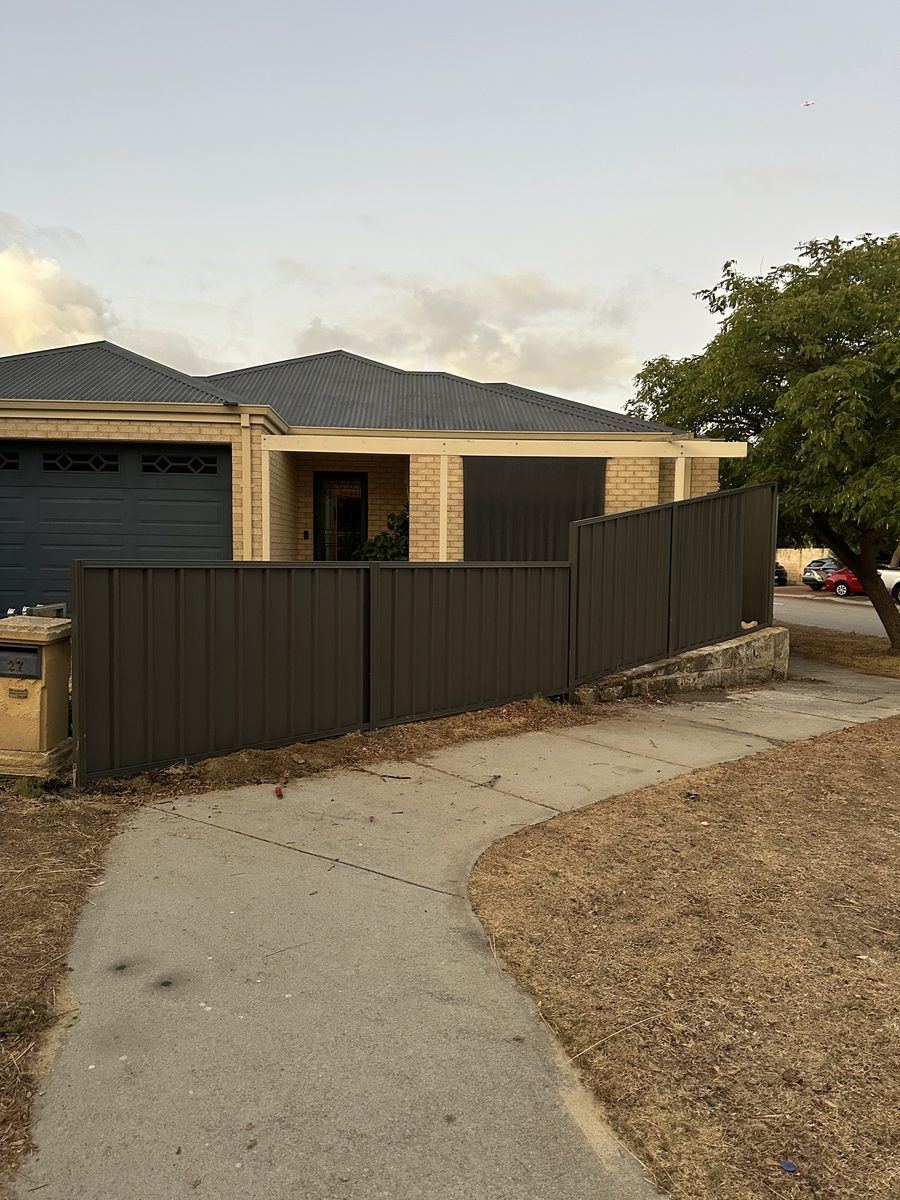
Colorbond steel is a popular choice across Perth because it provides a clean, solid boundary with very little ongoing work. It does not need painting, has no gaps for overlooking, and is available in colours that work with contemporary homes, established properties and commercial sites.
When comparing Colorbond fencing, look at panel height, steel quality, post and rail system, capping, gate integration and the finish on both sides of the boundary. A properly installed system feels straight, secure and consistent from one end to the other. It is particularly effective where privacy and a fast, durable result are the main goals.
The trade-off is that solid steel panels are not always the best choice where airflow or visibility is preferred. On exposed sites, design and footing requirements also need careful attention. Colour selection matters too, especially in strong sun, where darker tones can show dust more readily and absorb more heat.
PVC fencing for a crisp, low-maintenance finish
PVC fencing suits owners who want a bright, traditional or Hamptons-style appearance without the regular painting associated with timber. It is resistant to rot, termites and moisture, making it a practical option for front boundaries, gardens and homes where presentation is a key part of the brief.
Its strength lies in its tidy finish and low-maintenance appeal. However, compare the thickness and quality of the PVC components, internal reinforcement where required, and how the fence is fixed to cope with wind. Not all PVC systems perform the same way. A lower-priced option may use lighter sections that are less suited to a large or exposed boundary.
PVC also has a more defined aesthetic than Colorbond or aluminium. It can lift the look of the right property, but it should complement the architecture rather than compete with it.
Aluminium slats and screening for flexible design
Aluminium slat fencing offers a strong balance of privacy, airflow and modern style. Slat spacing can be adjusted to create heavier screening along a patio, pool zone or boundary, while a more open layout can soften a front fence without closing off the property.
This flexibility is the main reason to consider it. Aluminium will not rust like untreated steel and does not require the ongoing painting of timber. It is well suited to feature sections, gates, bin enclosures, courtyard screening and contemporary frontages.
When comparing slat systems, assess the slat profile, wall thickness, frame construction, powder-coated finish and spacing. Close-set slats provide more privacy but reduce light and airflow. Wider gaps feel lighter and can make a small front yard more welcoming, but they may not provide enough screening where neighbours are nearby.
Pool fencing where safety comes first
Pool fencing is not a place to compromise on material quality or installation accuracy. Frameless or semi-frameless glass creates a premium, open view around a pool, while aluminium pool fencing offers a reliable, lower-cost option with a wide range of colours and styles.
Glass can make compact pool areas feel larger and keeps views through to landscaping. It does, however, require regular cleaning to manage fingerprints, splash marks and water spots. Aluminium is easier to live with day to day and can be coordinated with other fencing or gate hardware around the property.
Whichever option you prefer, compare the complete system rather than the panels alone. Gates, hinges, latches, clearances, footing details and local compliance all matter. A pool fence must be installed to meet applicable safety requirements, and small errors in gate operation or spacing can create a serious issue.
Security fencing for higher-risk sites
Security fencing is designed for a different purpose from a standard residential boundary fence. Commercial properties, strata facilities, storage areas and some larger homes may require stronger materials, controlled access and a layout that discourages climbing or forced entry.
Steel tubular fencing, perforated panels and purpose-designed security systems can provide a more visible deterrent while maintaining sightlines. Compare fence height, rail and post strength, anti-climb features, gate frames, latch or access-control options, and whether the system can integrate with lighting or cameras.
The most secure-looking fence is not automatically the best solution. A front boundary that appears overly industrial may not suit a residential streetscape. The aim is to match the level of protection to the actual risk while keeping the property accessible and presentable.
Factor in maintenance over the life of the fence
The cheapest installed fence is not always the most economical option. Timber can have a warm, natural character and may suit heritage or garden settings, but it generally needs more attention over time. Painting, staining, repairs and the effects of moisture, pests and sun exposure should be included in the decision.
Colorbond, PVC and aluminium are popular largely because they reduce routine maintenance. They still benefit from occasional washing, particularly near the coast or in dusty areas, but they remove the regular painting cycle. Glass needs more frequent cleaning, while security steel systems should be checked periodically for coating damage, loose fixings and gate performance.
Think about who will maintain the fence. A homeowner may be happy to spend a weekend refreshing a timber boundary. An investor, busy family or commercial property manager will often place greater value on a low-maintenance material that stays presentable with minimal effort.
Budget for the full fencing system
Material price is only one part of the project cost. Site access, demolition and removal of an old fence, excavation, retaining requirements, post footings, custom gates, changes in height and difficult terrain can all affect the final figure.
It is also worth comparing what is included in each quote. One price may cover basic panels only, while another includes capping, posts, gate hardware, removal and a higher-quality finish. Ask for clarity on the scope so you can compare like with like.
If the budget is tight, consider where to spend and where to simplify. You may choose a practical Colorbond side boundary and invest in aluminium slats or PVC fencing at the front, where design has a bigger impact on street appeal. For larger projects, a staged approach can work if the key security and privacy areas are completed first.
Match the fence to the property, not the trend
A material should support the way the property is used. A sleek slat screen may be ideal beside an outdoor entertaining area, while Colorbond may be the better performer along a long side boundary. Glass suits a pool outlook that deserves to remain open. PVC can give a home a refined Hamptons feel. Security fencing provides peace of mind where protection and controlled access are essential.
The strongest result often combines materials rather than forcing one fence type across every part of the block. Consistent colours, finishes and gate details can tie these sections together without sacrificing performance.
For Perth, Bunbury and Busselton properties, local conditions and a proper site assessment should guide the final decision. Perth Fence Pro can help turn those priorities into a clear fencing plan, with materials and installation details suited to the property you have now and the way you want it to look and function long term.
A well-chosen fence should feel like part of the property, not an afterthought - secure where it needs to be, private where it counts, and easy to live with long after installation day.