
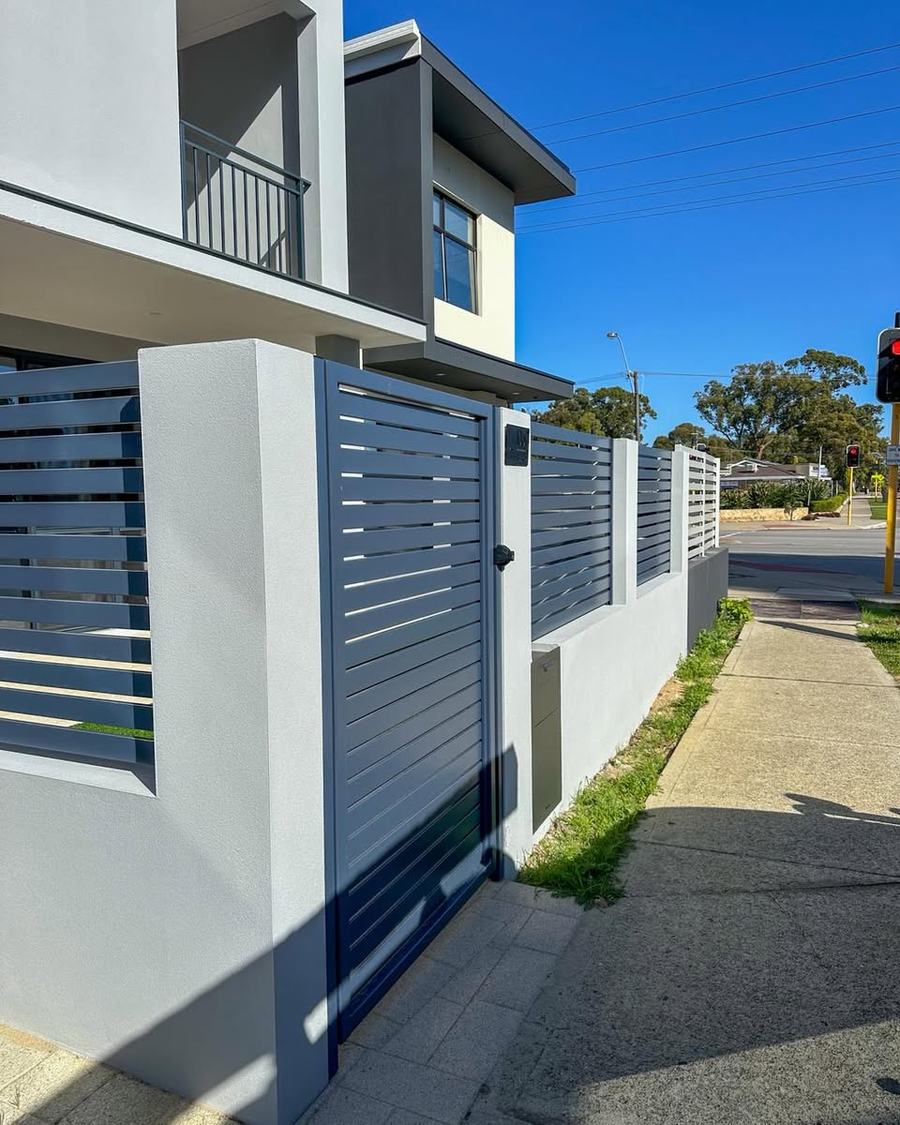
A front courtyard that feels exposed, a pool area with too much line of sight, or a boundary that needs privacy without looking boxed in - these are exactly the situations where aluminium slat screening privacy makes sense. It gives you a cleaner, more modern way to screen off parts of a property while still keeping airflow, light and street appeal in the picture.
For Perth homeowners and property managers, that balance matters. You want privacy, but you do not necessarily want a heavy solid wall. You want something durable, but not another job that needs constant upkeep. Aluminium slat screening sits in that sweet spot because it is practical, sharp-looking and well suited to WA conditions.
Why aluminium slat screening privacy is so popular
The main reason is simple - it solves more than one problem at once. A well-designed slat screen can improve privacy, define outdoor zones, lift the look of a frontage and add a layer of security without making the property feel closed off.
That is a big difference compared with some older screening options. Solid fencing gives full cover, but it can feel bulky or harsh in the wrong setting. Timber can look great at first, but it usually asks for more maintenance over time. Aluminium slats offer a modern finish with much less effort once installed.
They also suit the way many Perth homes are designed now. Newer builds and renovated properties often lean towards clean lines, open outdoor living and simple materials. Slat screening works with that style rather than fighting it.
Where aluminium slat screening works best
One of the strengths of aluminium slat screening privacy is flexibility. It is not limited to boundary fencing. It can be used in several areas across a property, and the best result often comes from matching the screen design to the exact purpose.
At the front of a home, slat screening can create privacy from the street while still presenting a neat, modern facade. That is especially useful for homes with courtyards, low-set windows or outdoor sitting areas that face public view. Around patios and alfresco spaces, it can help block sightlines from neighbours without cutting off breezes.
Pool areas are another common application. Privacy matters there, but so does appearance. A slat screen can make the area feel more finished and more private without looking too heavy. On commercial sites, it is often used to screen bins, plant equipment, service areas or outdoor staff zones while keeping the overall property looking tidy and professional.
Privacy without losing airflow
This is where slat screening stands apart from many full-panel options. Because the slats are spaced, you can reduce visibility while still allowing air to move through. In WA’s climate, that matters more than many people realise.
A fully closed-off area can hold heat and feel stuffy, particularly around outdoor entertaining spaces. Aluminium slats help soften that effect. You still get screening, but the area remains more comfortable to use. The level of privacy depends on the spacing, slat size and viewing angle, so there is no one-size-fits-all answer. A tighter gap gives stronger privacy, while a more open setting can be better where airflow and lighter visual impact are the priority.
That trade-off is worth thinking through early. If the goal is to block direct sightlines from next door, tighter spacing usually makes sense. If the screen is more about defining space and improving street presentation, a slightly more open design may be the better fit.
Style matters as much as function
Good fencing and screening should do the job, but it should also look right on the property. Aluminium slat screening privacy works well because it can be tailored to modern, coastal, minimalist and even more traditional homes depending on profile, spacing and powdercoat colour.
Black, monument and other darker finishes are popular because they create a clean architectural look. Lighter tones can soften the result and suit homes that want a less bold appearance. Wood-look finishes are also an option for owners who like the warmth of timber but want lower maintenance.
The key is to think about the screen as part of the whole exterior. It should work with your fencing, gates, garage door, wall colours and landscaping. When it all ties together, the property feels more considered and more valuable. When it does not, even a high-quality product can look out of place.
Low maintenance is a real advantage
For many property owners, this is what tips the decision. Aluminium is a practical material for screening because it does not rot, warp or attract the same upkeep issues you can get with timber. With the right finish, it stands up well and generally only needs occasional cleaning to keep it looking sharp.
That makes it a strong choice for busy households, investment properties and commercial premises where ongoing maintenance needs to stay low. It also helps if the screen is installed in a hard-to-reach area where sanding, staining or repainting would quickly become a hassle.
Of course, low maintenance does not mean no maintenance at all. Coastal locations, heavy weather exposure and built-up dirt can all affect appearance over time, so a basic cleaning routine still helps. But compared with many alternatives, the workload is light.
Security and privacy often go together
Privacy screening is usually about comfort and appearance, but it can also support security. By reducing direct visibility into a courtyard, side access or outdoor area, slat screening can make parts of the property less exposed. It also creates clearer boundaries, which is useful for both homes and commercial sites.
That said, privacy and security are not always exactly the same thing. If your main priority is to stop climbing, deter access or secure a commercial perimeter, the screen design needs to reflect that. Height, frame strength, gate integration and access points all become more important. In some cases, slat screening works best as part of a broader fencing solution rather than as a standalone feature.
This is where practical advice matters. The right screen for a front garden is not necessarily the right one for a side boundary or service yard.
Getting the installation right
Even the best-looking screen can underperform if it is poorly installed. Posts need to be properly set, lines need to be straight, spacing needs to be consistent and gates need to operate smoothly if they are part of the design. Small mistakes stand out quickly with slat products because the finish is so clean and linear.
Site conditions also matter. Sloping ground, wind exposure, access limitations and existing structures can all affect the final design. That is why made-to-measure installation usually gives a better result than trying to force a standard solution onto a site that has its own quirks.
A reliable installer will look at more than just the screen panel. They should consider how the screening connects with the rest of the property, whether extra privacy is needed at certain angles, and how to keep the result strong, neat and durable over time.
Is aluminium slat screening privacy right for every property?
Not always, and that is worth saying plainly. If you want complete visual blockout on a tight budget, there may be other fencing styles that suit better. If the home has a very traditional frontage, slat screening may need careful design choices to avoid looking too modern. And if noise reduction is the priority, slat screening will not perform the same way as a more solid barrier.
But for many Perth properties, it hits a very practical middle ground. It gives privacy without shutting the space down. It improves appearance without adding constant maintenance. It can be used in front yards, side boundaries, patios, pools and commercial settings with a consistent design language across the property.
That is why it continues to be one of the more versatile modern screening options available. When the layout, spacing and finish are chosen properly, it does more than hide an area - it improves how that space feels and functions.
If you are weighing up options for your home or site, start with the actual problem you want solved. Is it overlooking, street exposure, outdoor comfort, security, or simply a tired-looking area that needs a cleaner finish? Once that is clear, the right aluminium slat screening solution becomes much easier to define, and the end result is far more likely to feel right for the property.